
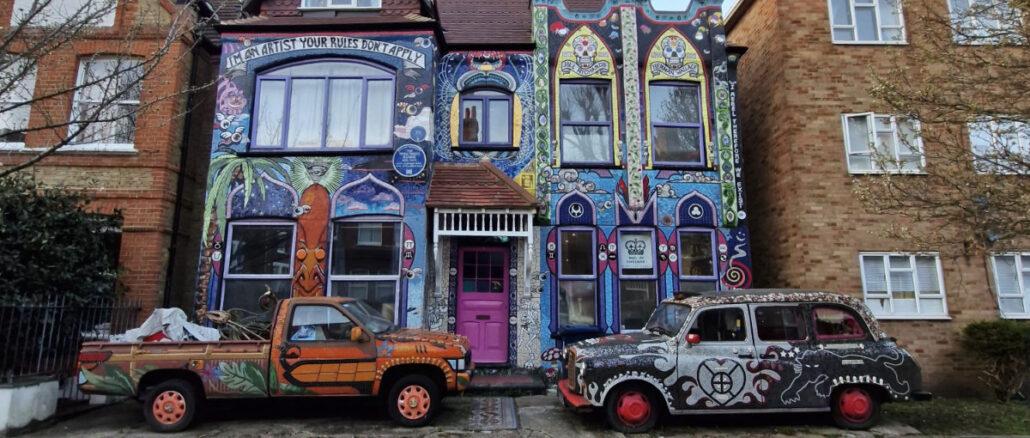
Mosaic House in Chiswick
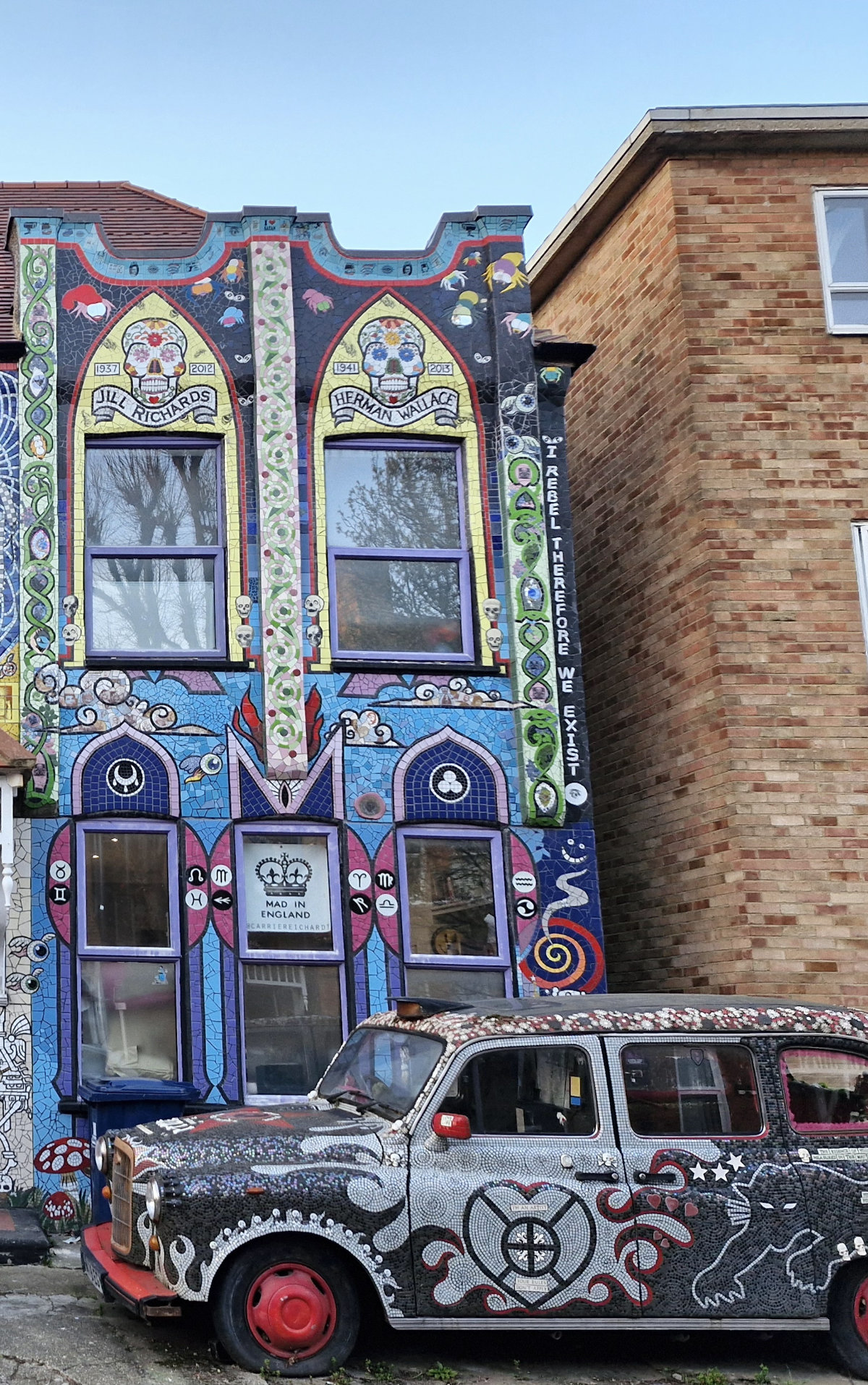
Tucked away on a quiet residential street in Chiswick is one of London’s most colourful and unusual sights. The Mosaic House is the home of artist Carrie Reichardt, but its exterior is also an extraordinary public artwork covered with thousands of tiles, ceramics, slogans and intricate details.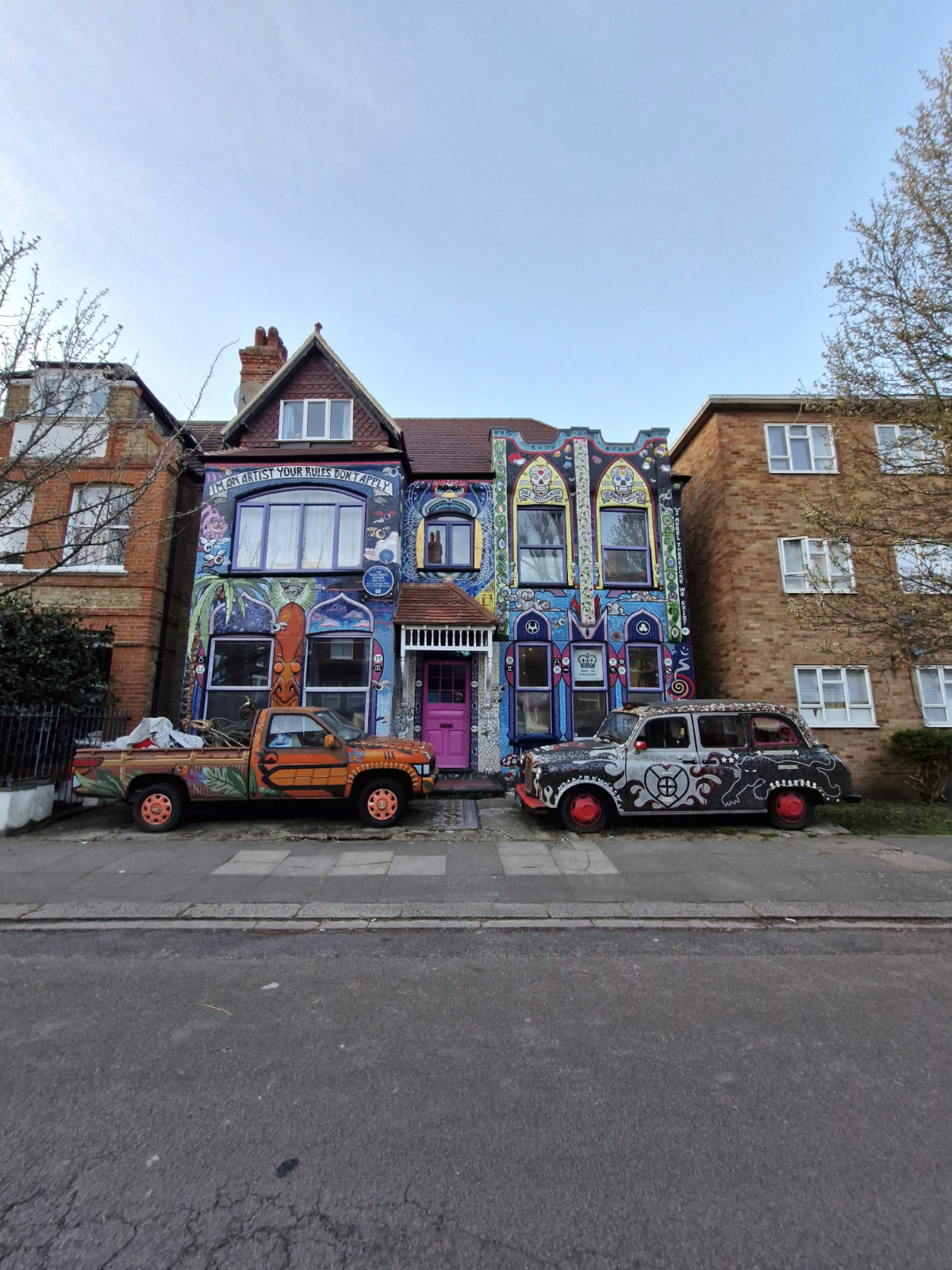
Also known as the Treatment Rooms, this tiled house in Chiswick is the complete opposite of the restrained brickwork surrounding it. Every available surface seems to contain something new to spot, from political messages and portraits to birds, flowers, skulls and bold flashes of colour.
If you enjoy street art, contemporary craft or simply discovering places away from London’s best-known tourist trail, the Mosaic House is well worth adding to a Chiswick walk.
Looking for more inspiration? Browse our London travel guides and discover more places in our Quirky category.
What is the Mosaic House in Chiswick?
The Mosaic House is the private home and working space of British artist Carrie Reichardt. What began as a mosaic on the back wall, created in honour of Luis Ramirez, developed over many years into a vast collaborative artwork covering the house and its surroundings.
Reichardt is known for combining traditional mosaic techniques with political and social commentary. The building is therefore far more than a brightly decorated house. Look closely and you will find pieces concerned with justice, activism, resistance and human rights alongside humorous, beautiful and sometimes unsettling imagery.
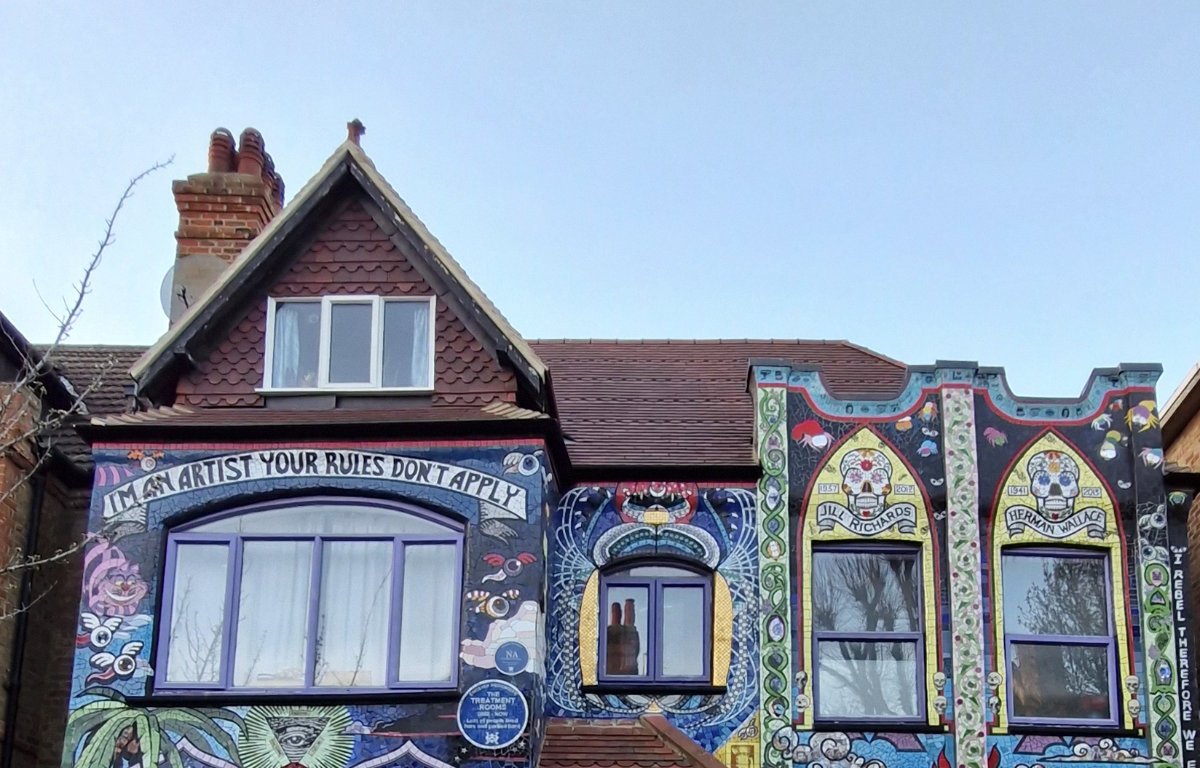
The project features work by mosaic artists from around the world, with each section telling its own story. The house was completed after a final concerted push in 2017, although its many layers make it feel like a living artwork rather than a conventional finished piece.
Why is it called the Treatment Rooms?
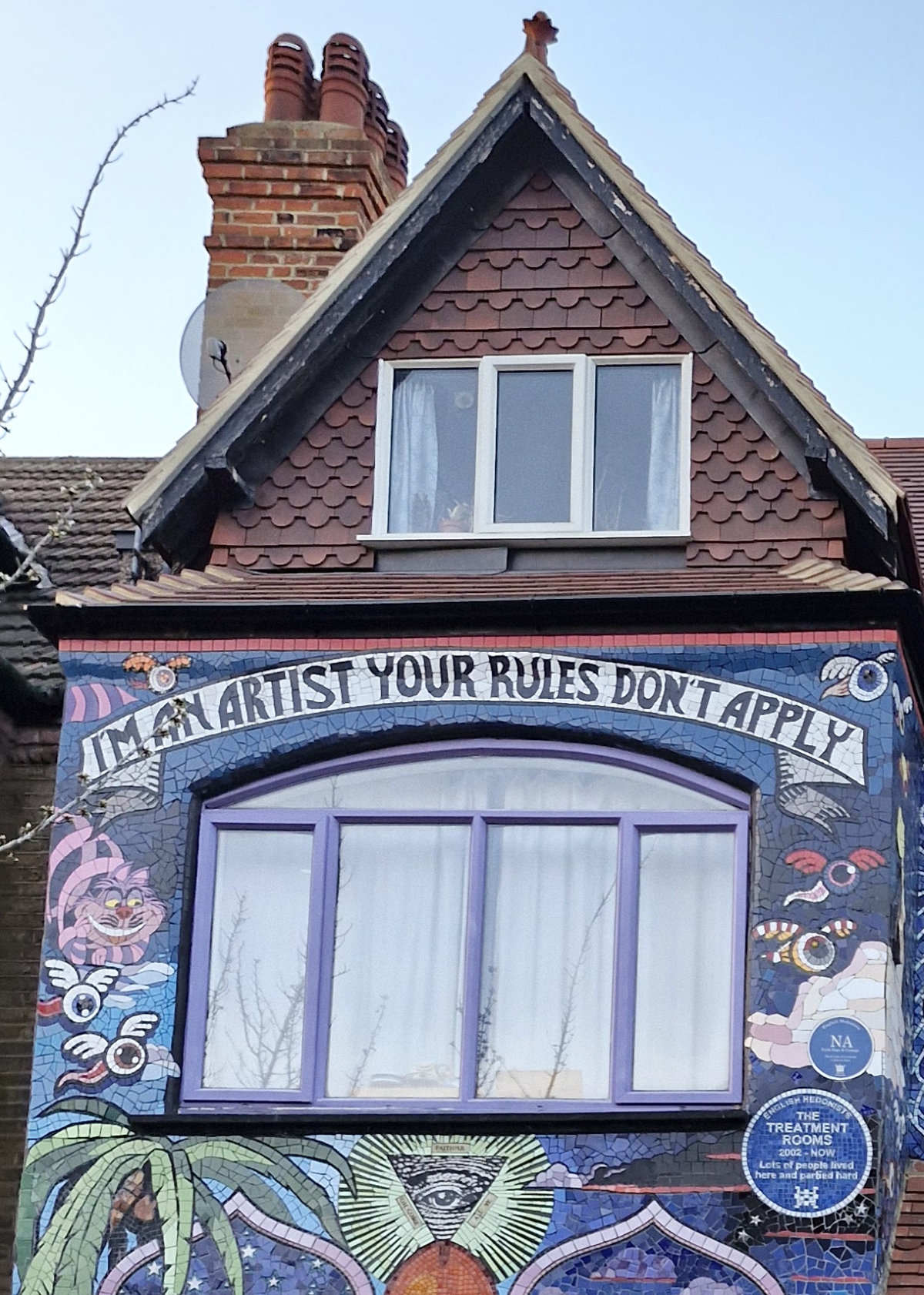
The building is also known as the Treatment Rooms. The name comes from its earlier use for holistic treatments, but it became associated with the collective of artists and makers who helped transform the property.
This collaborative approach is visible across the exterior. Although Carrie Reichardt is the driving force behind the project, the Mosaic House brings together the skills, ideas and individual styles of many contributors.
What can you see at the Mosaic House?
At first, the sheer amount of colour is what grabs your attention. Slow down, however, and the details begin to emerge. The walls contain portraits, quotations, decorative patterns, animals, flowers, bones and political statements. Even the vehicles outside have been turned into mosaic-covered artworks.
One of the best-known pieces is the orange Tiki Love Truck, connected to Reichardt’s campaign against the death penalty in the United States. It was previously exhibited at the V&A and is another example of how the artist uses decorative craft to communicate serious ideas.
Can you go inside the Mosaic House?
The Mosaic House is a private home, not a conventional museum or visitor attraction. Visitors are welcome to view and photograph the public-facing artwork from outside, but access to the house and studio is by appointment only.
Please respect the residents and neighbours, avoid blocking entrances, and keep noise to a minimum. Do not enter the property unless you have arranged a visit in advance.
For current information, exhibitions and occasional events, check Carrie Reichardt’s official Mosaic House page or follow Mosaic House Chiswick on Instagram.
Where is the Mosaic House in Chiswick?
The mosaic-covered exterior can be seen on Fairlawn Grove, beside Acton Lane in Chiswick, West London. The artist’s official website lists the Treatment Rooms at 199 Acton Lane, London W4 5DA.
As it stands in a residential neighbourhood, approach the address as you would any private home. There is no ticket office, public entrance or guaranteed access to the interior.
How to get to the Mosaic House by public transport
By Underground
Chiswick Park is the nearest London Underground station. It is served by the District line and the house is only a short walk away.
Turnham Green station is another option. It is served by the District line and by Piccadilly line trains at limited times, so check the Transport for London journey planner before travelling.
By Overground
Gunnersbury station, served by the London Overground and District line, is also within walking distance.
By bus
Several bus routes serve Chiswick High Road and the surrounding area. The 94 bus from central London terminates near Acton Green, making it a useful option if you would rather see more of the city on the journey.
Public transport is the easiest way to visit. Parking is limited on the surrounding residential streets and local restrictions may apply.
Is the Mosaic House free to visit?
Yes. It is free to view the exterior of the Mosaic House from the public street. There is no admission charge for looking at the outside or taking respectful photographs.
This makes it a good addition to a day exploring free and unusual things to do in West London. Remember that special openings, talks or organised visits may operate differently, so check the artist’s official channels for any current arrangements.
Photography tips
The Mosaic House is extremely photogenic, but capturing it can be surprisingly tricky because there is so much detail.
- Take a wide photograph first to show how dramatically the house contrasts with the surrounding street.
- Move closer for details of individual tiles, words and faces.
- An overcast day can help reduce glare on the glazed surfaces.
- Photograph from the public pavement and be considerate of residents.
More quirky places to visit in London
The Mosaic House is an excellent choice for visitors who prefer unusual London attractions to the usual checklist of landmarks. If this colourful Chiswick landmark appeals to you, try these other Foodie Explorers guides:
- Shepherdess Walk Park Mosaics – another colourful community mosaic project, this time in Hoxton.
- The Thin House at Thurloe Square – one of London’s most curious pieces of architecture.
- Longplayer at Trinity Buoy Wharf – a musical installation designed to play for 1,000 years.
- St Dunstan in the East – a hidden garden growing through the ruins of a City church.
- York Road Underground Station – the story of one of London’s forgotten Tube stations.
- Visit Abbey Road – practical tips for seeing the famous Beatles crossing.
You can also browse all our London food and travel articles or find more quirky attractions, hidden history and unusual places.
Is the Mosaic House worth visiting?
Yes, particularly if you are already exploring Chiswick or enjoy street art, mosaics and offbeat London sights. It is not a full-day attraction and the exterior may only take 20 to 30 minutes to examine, but the craftsmanship and wealth of detail make it memorable.
We would combine it with a wander along Chiswick High Road, coffee or lunch nearby.
Essential visitor information
Attraction: Mosaic House, also known as the Treatment Rooms
Artist: Carrie Reichardt
Location: Fairlawn Grove and 199 Acton Lane, Chiswick, London W4 5DA
Nearest Tube: Chiswick Park
Admission: Free to view from the public street
Interior access: By appointment only
Best for: Street art, contemporary mosaics, photography and unusual London attractions
Website: carriereichardt.com/mosaic-house





Be the first to comment