 Emma Mykytyn
 St Dunstan in the East London: A Hidden Garden Among the Ruins
 A Brief History of St Dunstan in the East
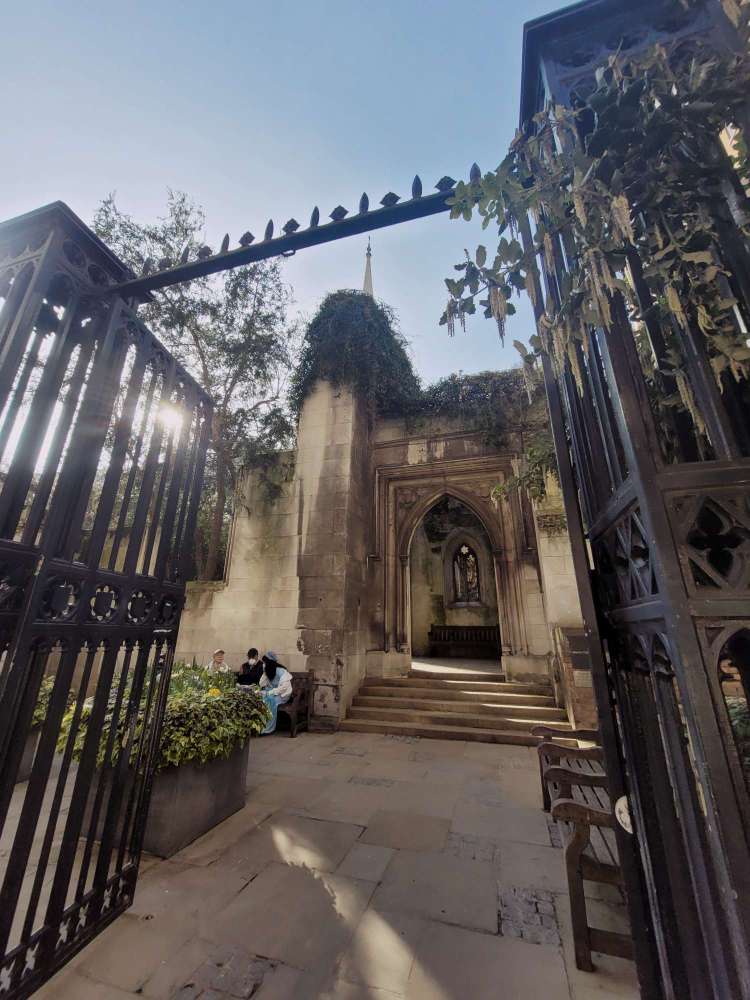
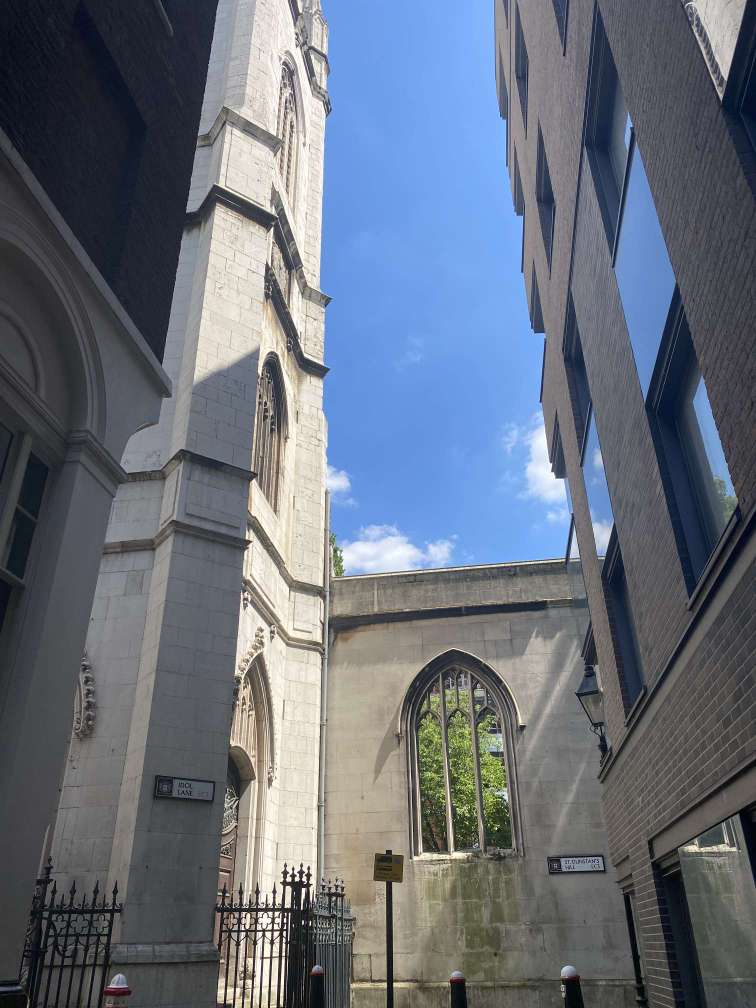
The church of St Dunstan in the East dates back to around the 12th century. Like much of the City of London, it suffered damage during the Great Fire of London in 1666 and was later repaired, with a tower and steeple designed by Sir Christopher Wren.
The church was badly damaged again during the Blitz in 1941. Instead of fully rebuilding it after the Second World War, the ruins were preserved and later opened as a public garden. Today, the remaining walls and tower stand as a striking reminder of London’s layered history.
What to See at St Dunstan in the East
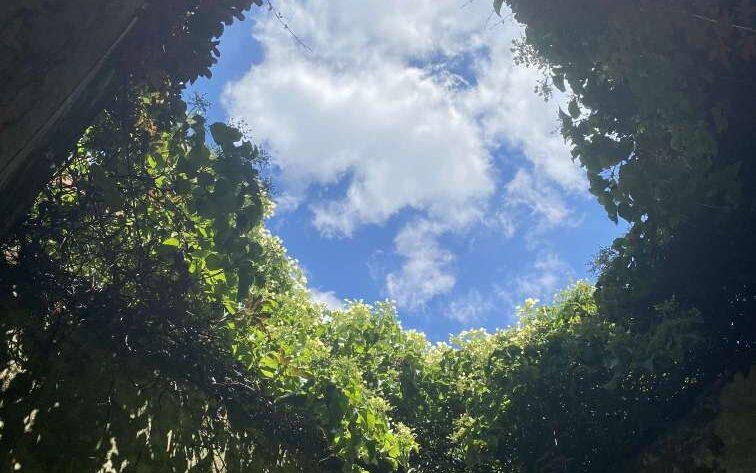
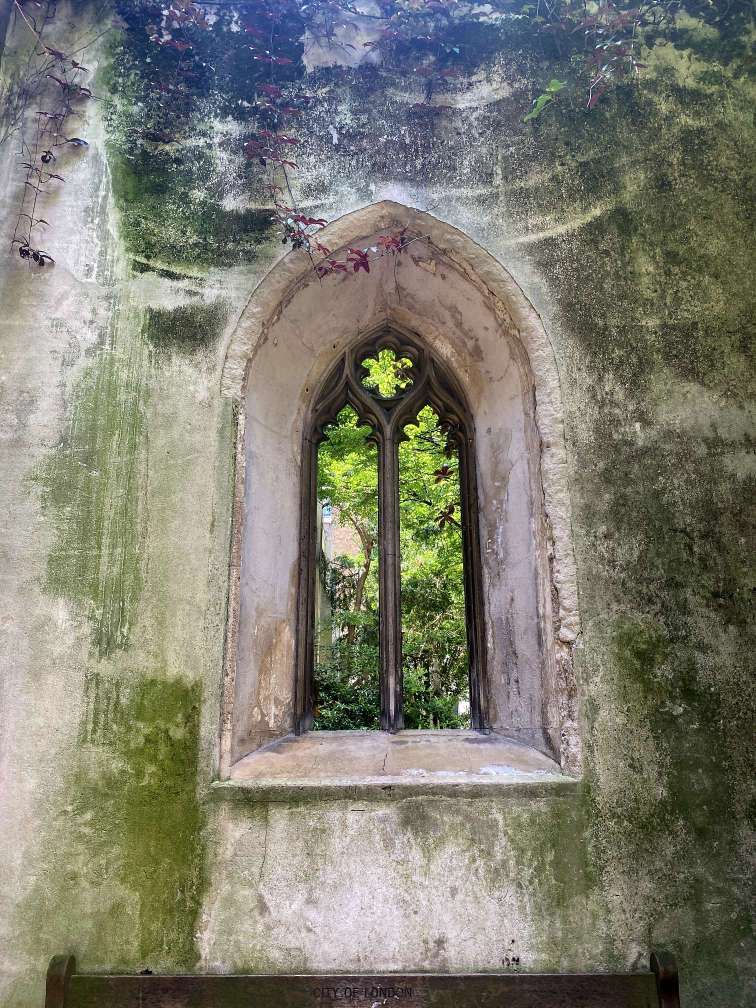
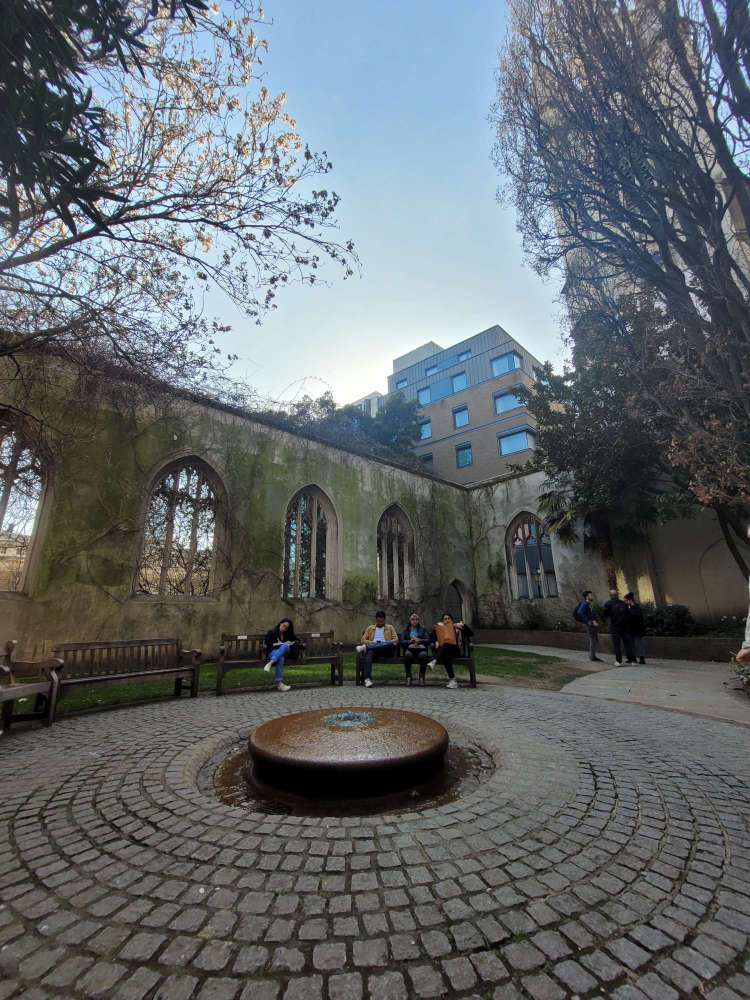
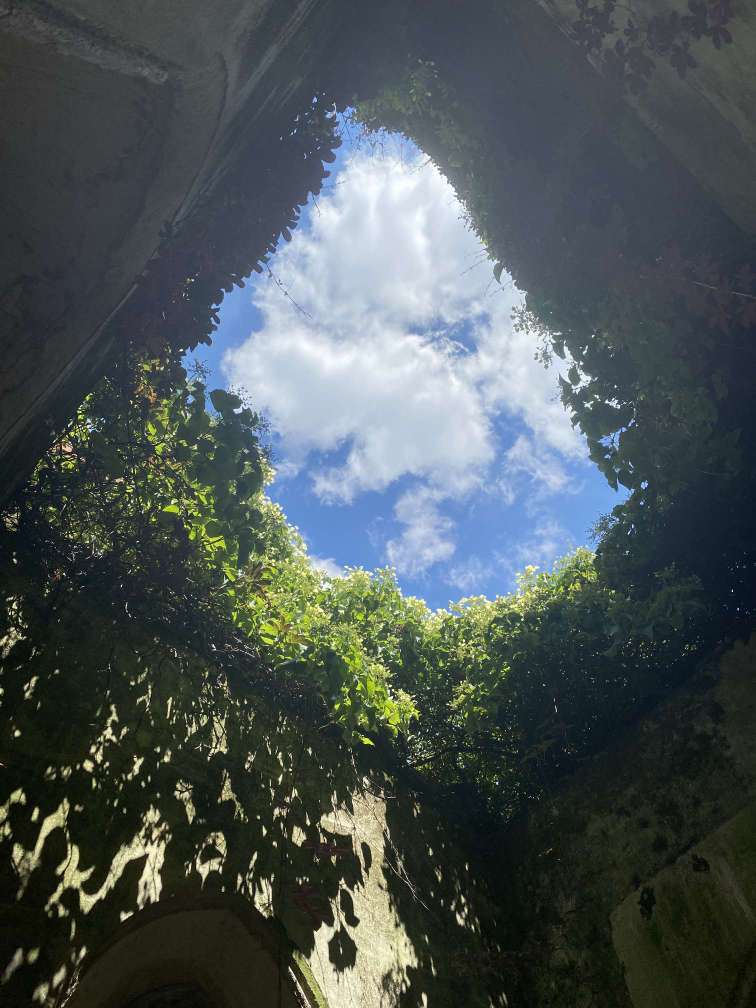
The charm of St Dunstan in the East is in the contrast between old stone and thriving greenery. Climbing plants twist through empty windows, trees rise where the nave once stood, and a small fountain adds to the peaceful atmosphere.
- Ivy-covered ruins – perfect for atmospheric photographs
- Historic church arches – a beautiful reminder of old London
- Quiet garden seating – ideal for a city-centre break
- Sir Christopher Wren’s tower – still standing above the ruins.
Why Visit St Dunstan in the East?
St Dunstan in the East is one of the best examples of how London blends history with modern life. Office workers stop here for lunch, photographers come for the dramatic ruins, and visitors discover a quieter side of the City.
It is especially lovely if you enjoy unusual London locations, historic architecture, hidden gardens or free attractions. It is also a great place to pause during a walk between Monument, Tower Bridge and the Tower of London.
Where is St Dunstan in the East?
St Dunstan in the East is located in the City of London, close to Monument, Tower Hill and London Bridge.
Address: St Dunstan’s Hill, London EC3R 5DD
Nearest Tube Stations
- Monument – around 5 minutes’ walk
- Tower Hill – around 7 minutes’ walk
- London Bridge – around 10 minutes’ walk
Transport for London Journey Planner link.
Things to Do Nearby
St Dunstan in the East is easy to combine with several major London sights.
- The Monument – climb for views over the City
- Tower of London – one of London’s most famous historic attractions
- Tower Bridge – a classic London landmark
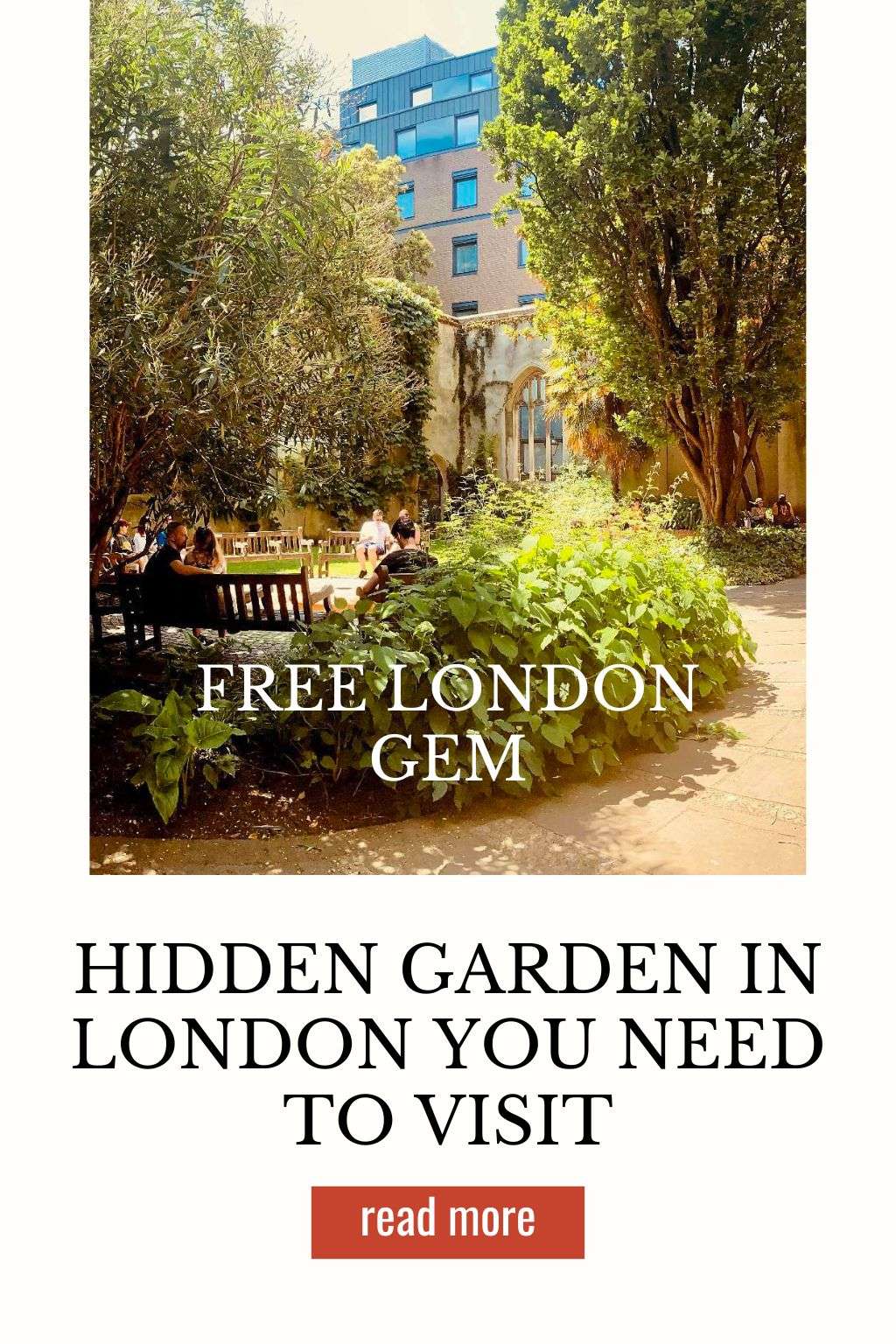
- Leadenhall Market – beautiful covered market with shops, pubs and restaurants
- Sky Garden – free viewpoint nearby, booking usually required
Foodie Explorers Tip
Pick up a coffee or lunch nearby and take a quiet break inside the garden. It is small, so it does not take long to visit, but it is one of those London places that rewards you for slowing down.
For the best photographs, visit early in the morning or later in the afternoon when it is quieter.
Looking for nearby explores?
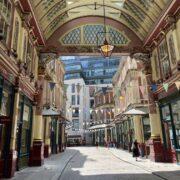
Visit the only statue of Lenin in London
Leadenhall Market London Guide: Food, history and Harry Potter
Final Thoughts
St Dunstan in the East is one of London’s most beautiful hidden gardens. It is free to visit, full of history and surprisingly peaceful considering its central location. Whether you are exploring the City of London, looking for unusual London photo spots, or simply need a calm place to sit, this ruined church garden is a must-see.
FAQ: St Dunstan in the East London
Is St Dunstan in the East free to visit?
Yes, St Dunstan in the East is free to visit. It is a public garden in the City of London.
Where is St Dunstan in the East?
St Dunstan in the East is located on St Dunstan’s Hill in the City of London, close to Monument, Tower Hill and London Bridge.
What is St Dunstan in the East?
St Dunstan in the East is a former church ruin that has been transformed into a peaceful public garden.
What is the nearest Tube station to St Dunstan in the East?
The nearest Tube station is Monument, which is around a five-minute walk away. Tower Hill and London Bridge are also nearby.
Is St Dunstan in the East worth visiting?
Yes, St Dunstan in the East is worth visiting if you enjoy hidden London spots, historic buildings, peaceful gardens and free attractions.
Can you take photos at St Dunstan in the East?
Yes, photography is allowed, and the ivy-covered ruins make it one of the most photogenic hidden places in London.