
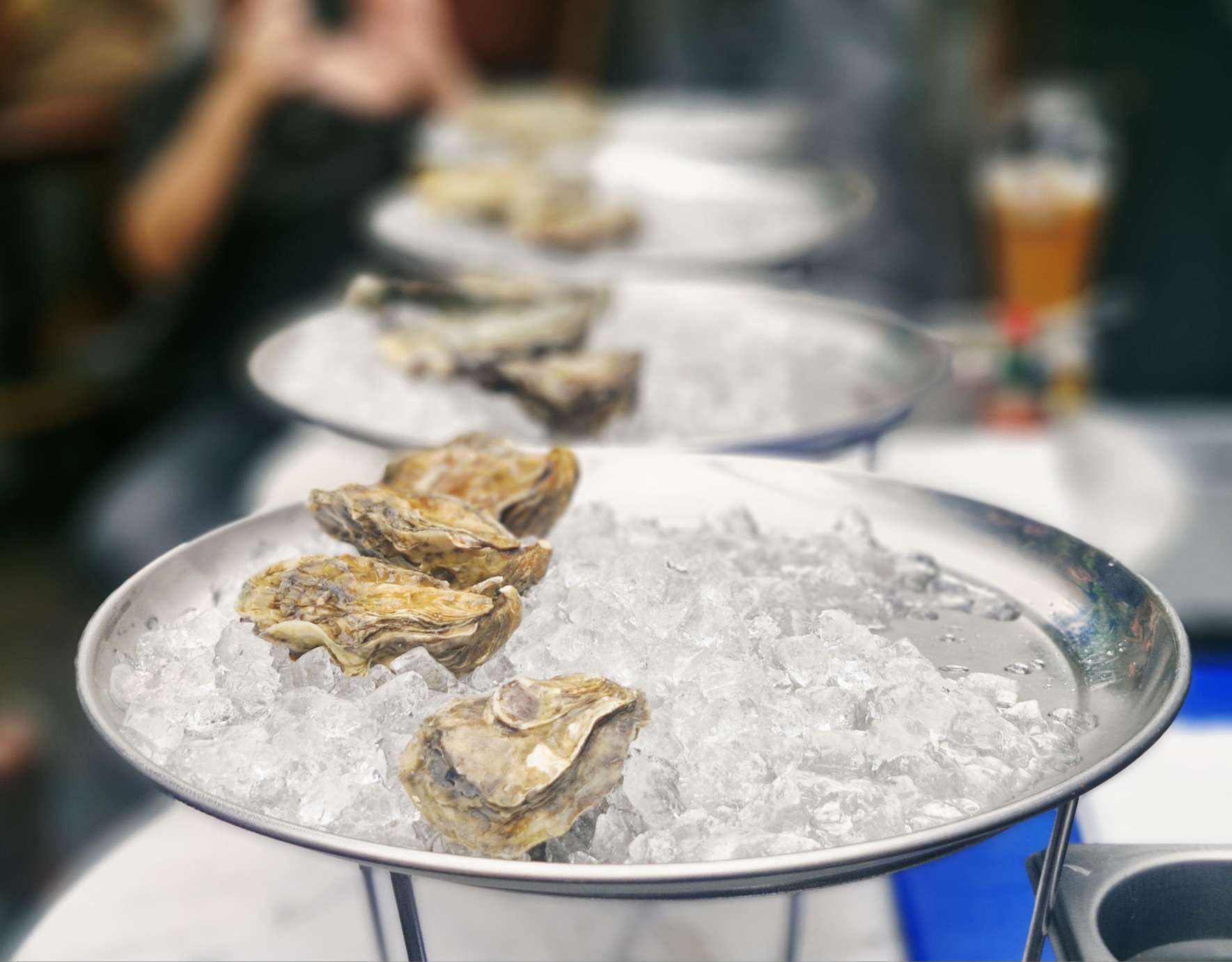
How to Eat Oysters Without Looking Like a Beginner
If you have ever been presented with a beautiful platter of oysters on crushed ice and suddenly wondered how on earth you are supposed to eat them, you are certainly not alone.
Raw oysters can look rather intimidating if you have never eaten them before. Do you use the little fork? Are you supposed to swallow them whole? Should you add lemon?
We joined The Finnieston to taste a selection of oysters and find out how to enjoy them.
Whether you are visiting an oyster bar, ordering seafood at a fine-dining restaurant or trying raw oysters for the first time on holiday, here is our Foodie Explorers guide to how to eat raw oysters properly, how to tell whether an oyster is fresh and what to order when faced with a long oyster menu.
How Do You Eat a Raw Oyster?
There is no complicated ceremony involved in eating an oyster.
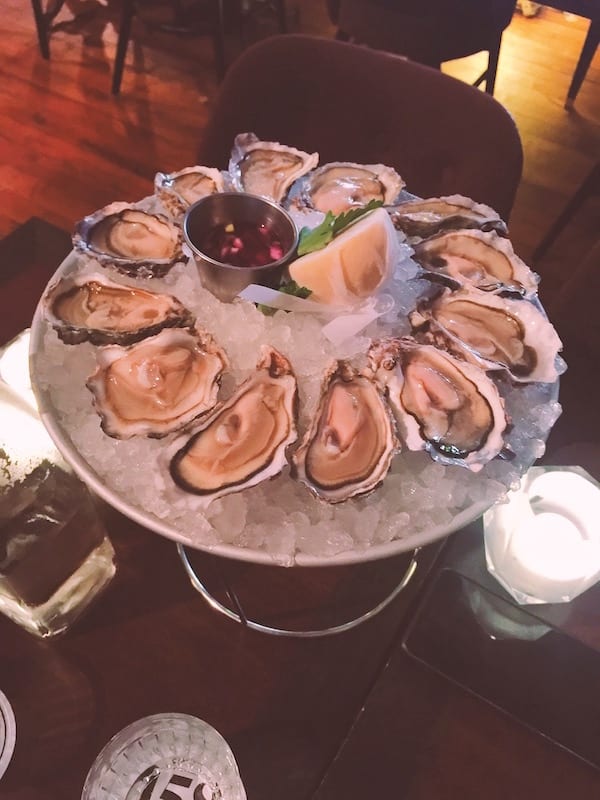
When the oysters arrive, they will normally be sitting in their half shells on a bed of crushed ice.
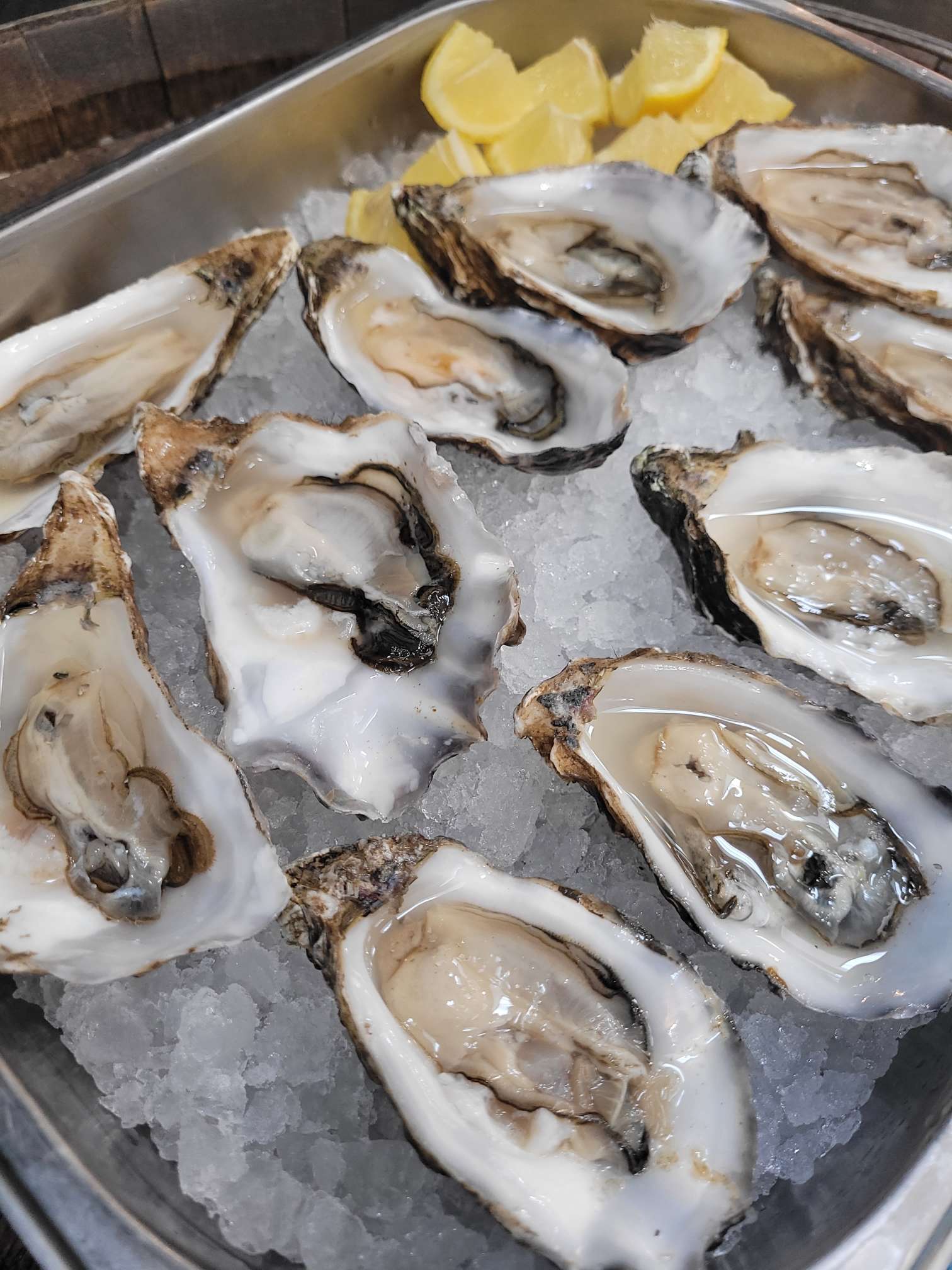
Take the small oyster fork and gently move the oyster around inside the shell. You are simply checking that the oyster has been completely detached from the shell by the person who shucked it.
Once it is loose, put the fork down.
Pick up the shell, bring the wider end towards your mouth and tip the oyster, together with some of its natural liquor, into your mouth. And yes, slurping is perfectly acceptable when eating oysters.
Should You Chew an Oyster?
Absolutely. One of the biggest myths surrounding how to eat fresh oysters is that you should simply swallow them whole.
Don’t. Give the oyster a couple of gentle chews before swallowing.
Chewing releases much more of the flavour and allows you to appreciate the oyster’s texture as well as the characteristics of the water in which it was grown.
Think of it rather like eating a grape. Swallowing it whole means missing much of what makes it enjoyable.
What Do Raw Oysters Taste Like?
The flavour of an oyster varies enormously depending on where it has been cultivated.
Oysters absorb characteristics from their environment, which means the sea, bay or estuary where they were grown can have a considerable influence on their taste.
Some oysters are intensely salty and briny while others are creamy, sweet or surprisingly delicate. Texture can vary too.
Oysters may be soft and creamy or considerably firmer and meatier.
This variation is one of the reasons trying oysters from different regions can be so interesting.
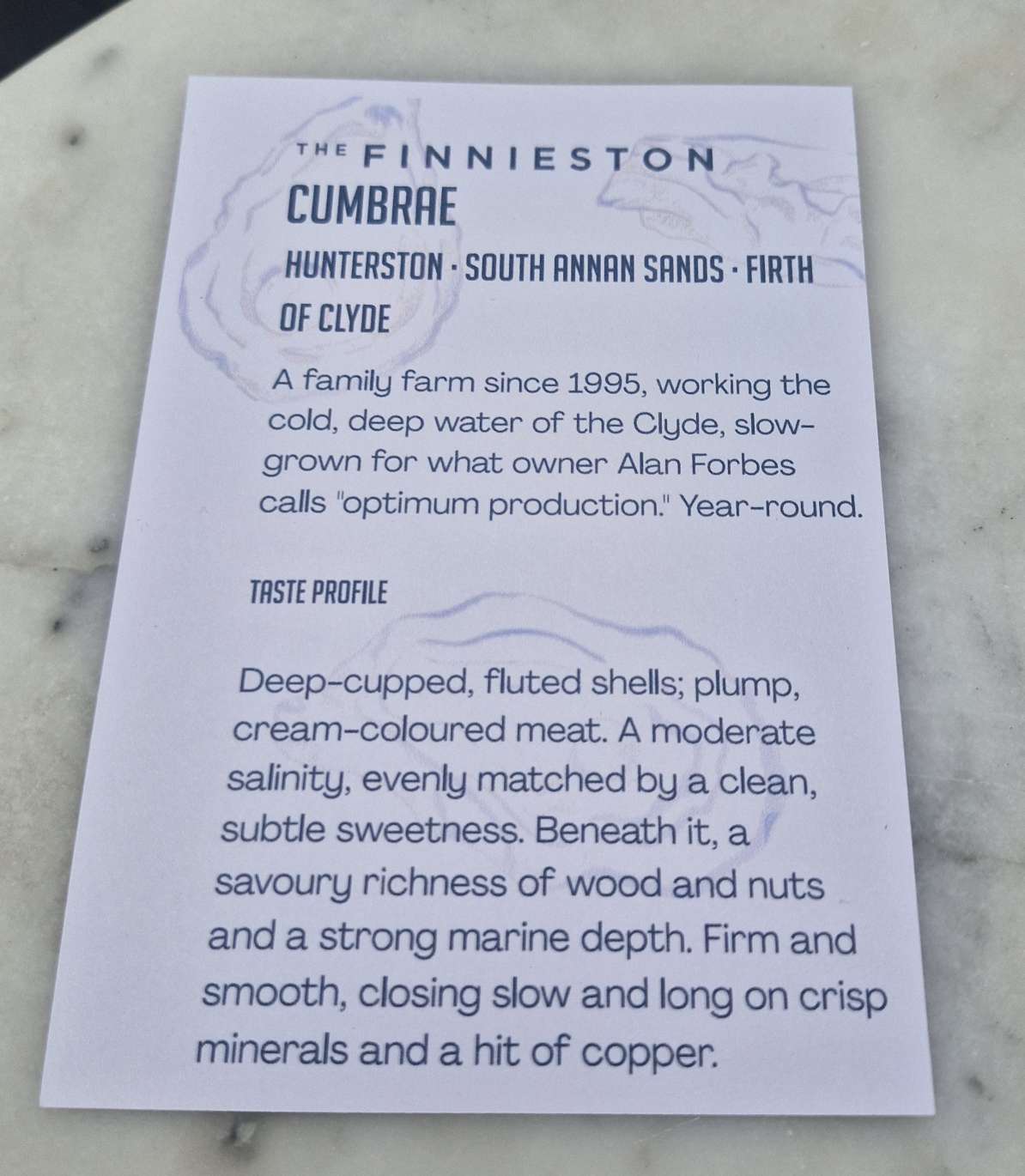
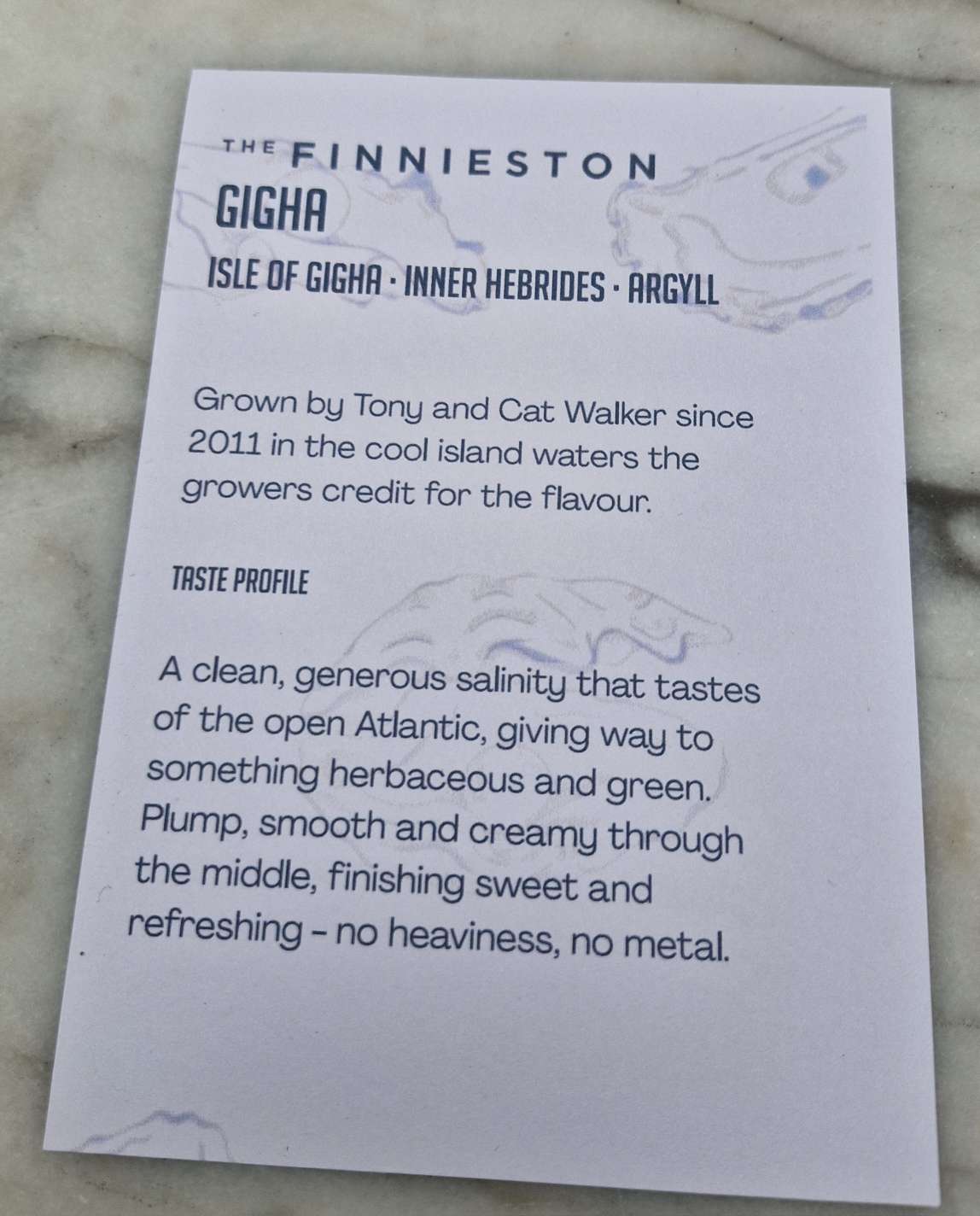
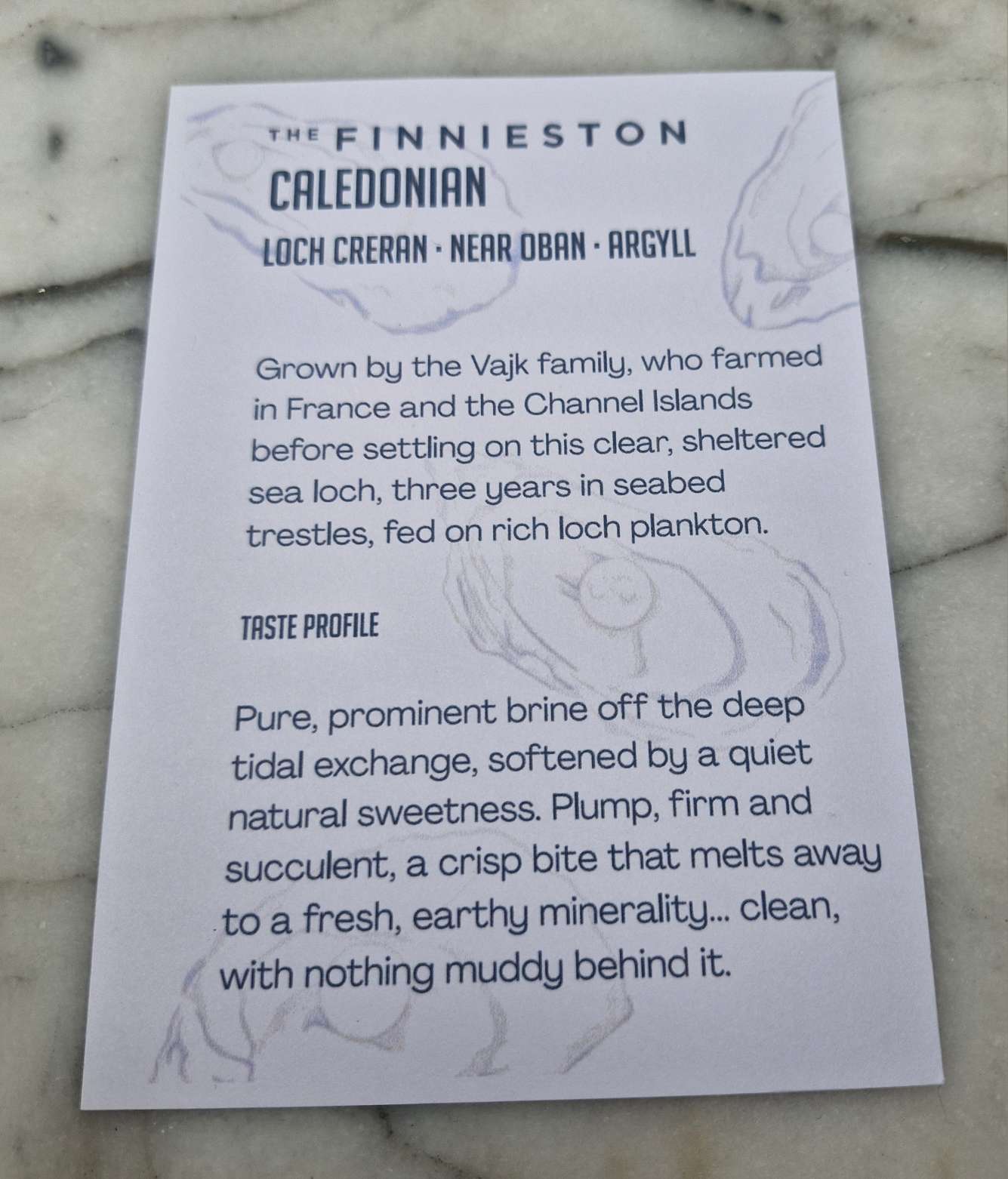
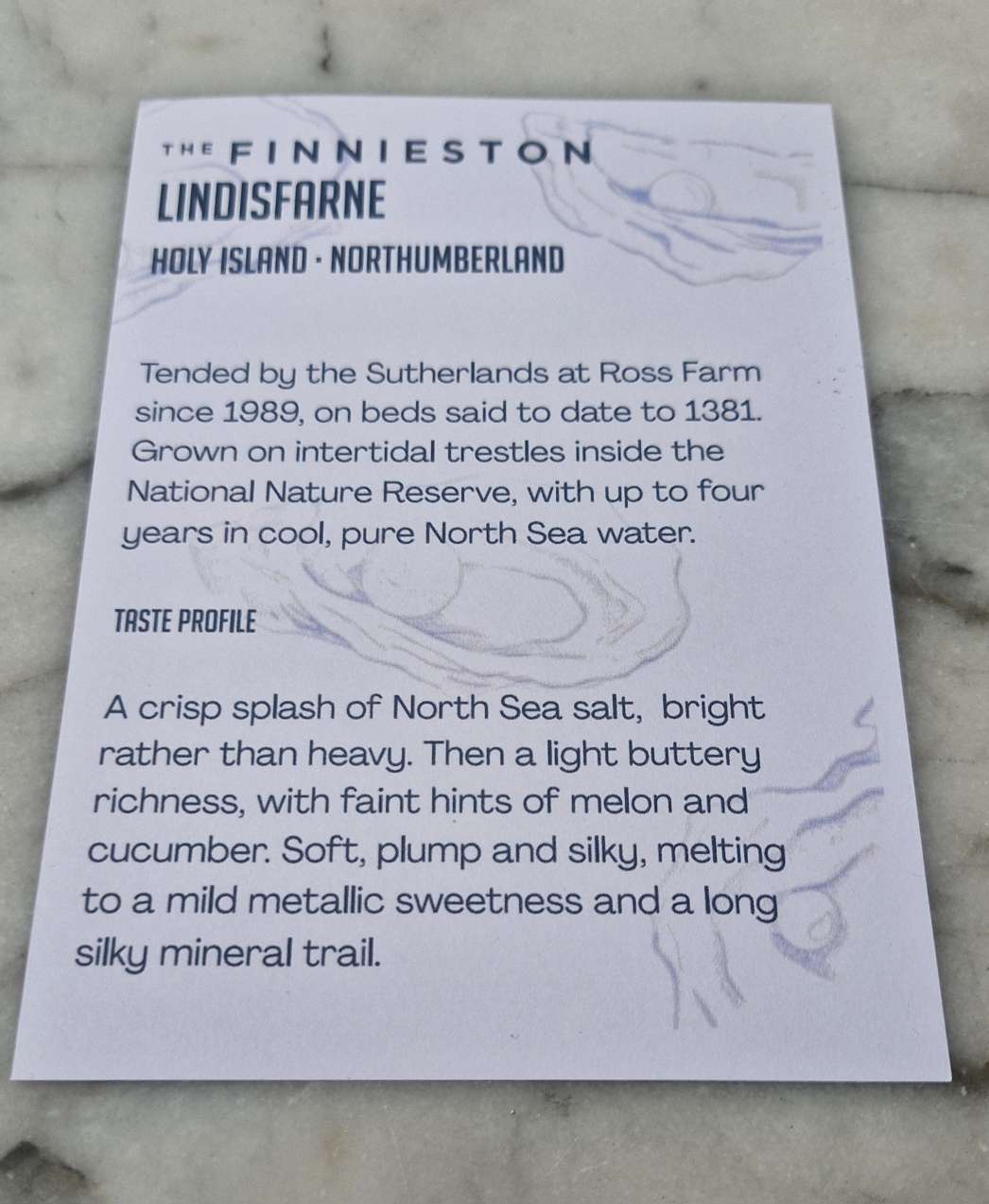
Here are some info cards from The Finnieston outlining the different areas and the characteristics of the oysters they source.
Should You Put Lemon or Sauce on Raw Oysters?
That is completely up to you. Oysters are frequently served with accompaniments such as:
– fresh lemon wedges
– mignonette
– shallot vinegar
– hot sauce
– cocktail sauce
– Tabasco
A classic mignonette sauce for oysters is usually made from vinegar, finely chopped shallots and pepper.
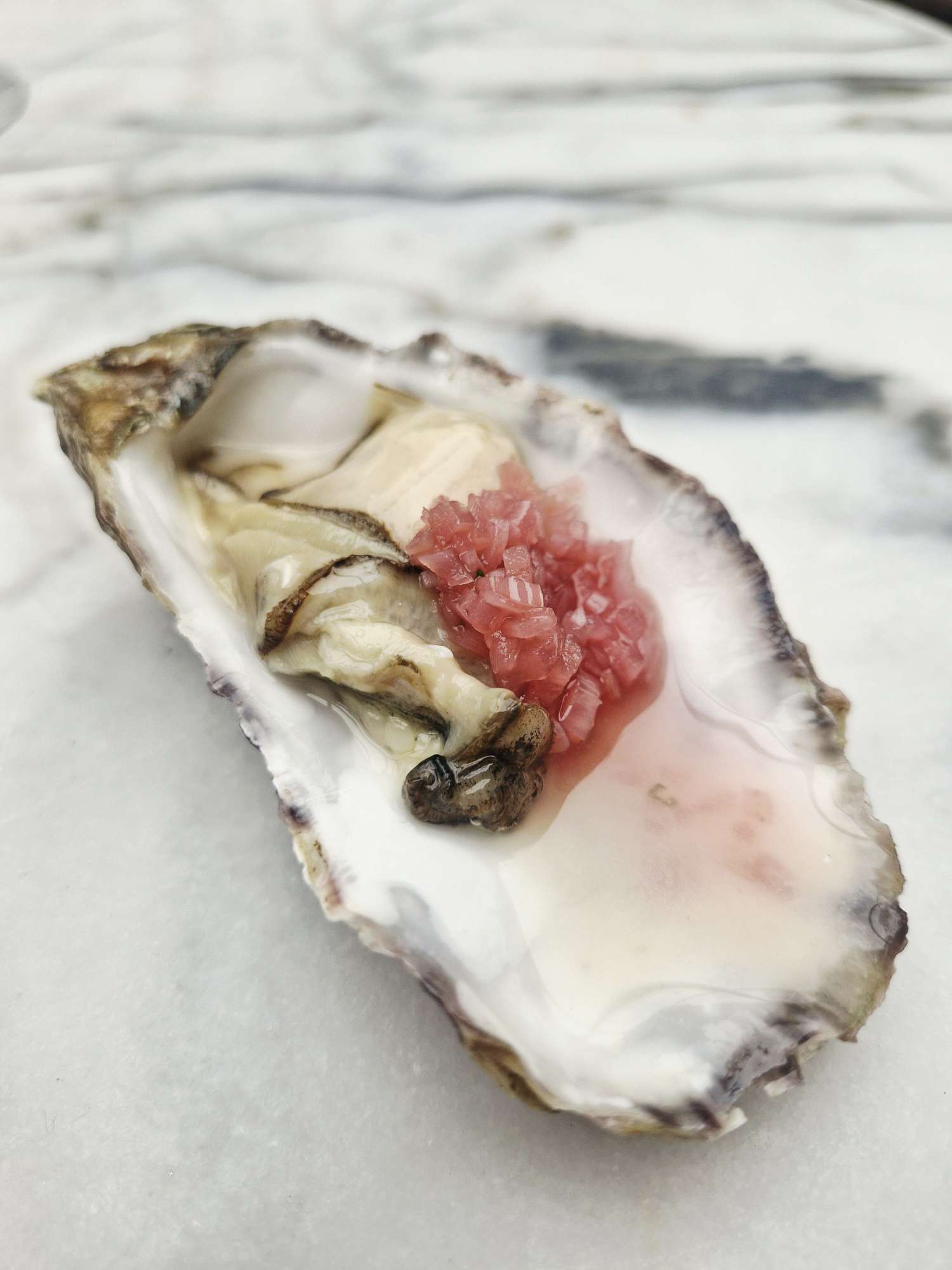
Purists often prefer eating their first oyster completely unadorned so they can taste the oyster itself.
Try the first one without anything added. You can then experiment with lemon, mignonette or whatever accompaniments have been provided.
There is no oyster police waiting to arrest you for adding Tabasco!
What Is the Liquid Inside an Oyster Shell?
Don’t pour it away. The liquid surrounding a freshly shucked oyster is often called oyster liquor.
It is part of the oyster-eating experience and provides plenty of that fresh, salty, maritime flavour.
When eating the oyster directly from its shell, tip the liquor into your mouth along with the oyster.
How Can You Tell If a Raw Oyster Is Fresh?
A freshly shucked oyster should look plump and moist rather than dried out.
There should normally be some clear liquid in the shell surrounding it.
The oyster itself should look substantial within its shell rather than thin and shrivelled.
Most importantly, trust your nose. Fresh oysters should smell clean and maritime, essentially like the sea.
They should not have a strongly unpleasant or rotten smell.
If an oyster smells wrong or you are concerned about its appearance, don’t eat it.
Why Are Oysters Named After Places?
You might find oyster menus surprisingly confusing.
Instead of simply listing “oysters”, restaurants can offer several varieties with names you have never heard before.
Many oysters are named after the location where they were grown or harvested.
This matters because water temperature, salinity, minerals, tides and the oyster’s food supply can all influence the eventual flavour.
In wine terms, you could almost think of it as the oyster equivalent of terroir.
The same species of oyster grown in two different locations can have noticeably different flavours.
Oyster Etiquette: What Not to Worry About
The biggest piece of advice for anyone nervous about eating oysters for the first time is simply to relax.
You don’t need encyclopaedic knowledge of oyster-growing regions.
You don’t need to know obscure seafood terminology.
And you certainly don’t need to pretend you can detect seventeen different flavours of seaweed.
Pick up the shell.
Slurp the oyster.
Chew it.
Enjoy it.
That’s basically oyster etiquette covered.
What Should You Drink With Oysters?
Oysters work particularly well with drinks that are crisp, dry and refreshing.
Popular oyster pairings include:
Champagne
The acidity and bubbles work particularly well with salty, fresh oysters.
Muscadet
A classic French seafood pairing with plenty of freshness and minerality.
Chablis
Its crisp acidity makes it another popular partner for shellfish.
Picpoul de Pinet
Fresh, citrusy and particularly good with seafood.
Dry sparkling wine
You certainly don’t need Champagne. Cava, Crémant and other dry sparkling wines can work beautifully.
Stout
It might sound unusual, but oysters and stout are a long-established combination.
Can You Eat Oysters at Home?
Yes, although opening them safely requires a little practice.
If you want to prepare fresh oysters at home, buy them from a reputable fishmonger and keep them properly chilled.
You will need an oyster knife and should protect the hand holding the shell with a thick cloth or suitable oyster glove.
Opening, or shucking, oysters deserves a guide of its own, particularly because an oyster knife meeting your palm isn’t the sort of food adventure anyone wants.
If you have never shucked oysters before, asking your fishmonger to open them for you may be the easiest solution.
How to Eat Oysters for the First Time
If you’re still feeling nervous, our beginner’s method couldn’t be simpler:
1. Start with one small, freshly shucked oyster.
2. Smell it — it should smell fresh and clean.
3. Use the oyster fork to check that it has been detached from the shell.
4. Try your first oyster without sauce.
5. Lift the shell to your mouth and slurp from the wider end.
6. Chew the oyster a couple of times.
7. Think about the flavour — salty, sweet, creamy, mineral or briny?
8. Try another with lemon or mignonette and compare.
Before long, that slightly intimidating seafood platter becomes considerably less mysterious.
Frequently Asked Questions About Eating Oysters
Do you swallow oysters whole?
You can, but you will experience much more of the oyster’s flavour if you chew it a couple of times before swallowing.
Are you supposed to slurp oysters?
Yes. Eating a raw oyster directly from its shell is perfectly acceptable, and a little slurping comes with the territory.
Do you use a fork to eat oysters?
The small oyster fork is mainly used to make sure the oyster has been loosened from the shell. After that, most people lift the shell and eat the oyster directly from it.
Should I drink the liquid in an oyster shell?
Yes. The natural oyster liquor is part of the flavour of a freshly shucked oyster.
What sauce goes with raw oysters?
Popular choices include lemon juice, mignonette, shallot vinegar, Tabasco and cocktail sauce, although good oysters can be enjoyed without anything added.
How do you know if an oyster has gone bad?
A fresh oyster should smell clean and reminiscent of the sea. Avoid oysters that smell strongly unpleasant, appear dried out or otherwise look questionable.
What is the best oyster for beginners?
Rather than looking for one specific variety, ask for something mild, creamy and not overwhelmingly salty. Your oyster bar or fishmonger should be able to recommend whatever is particularly good that day.
Foodie Explorers’ Oyster Tips
If you’re ordering a mixed selection, eat the mildest oysters first and the strongest, saltiest or most intensely flavoured oysters last.
It allows you to appreciate the subtle differences between them rather than having a particularly punchy oyster overwhelm everything that follows.
Most importantly, don’t let oyster etiquette put you off.
A platter of oysters should be something to enjoy rather than an examination in fine-dining manners.
Once you know the basics — loosen, lift, slurp and chew — you’re ready to get stuck in.
If you feel like trying them out, get along to Fridays at The Finnieston £2 Oysters 4-6PM Every Friday. 🦪







Be the first to comment