“No One Makes It Out Alive”: Inside the Bold Pink-and-Gold World of Street Artist Hells Gibson
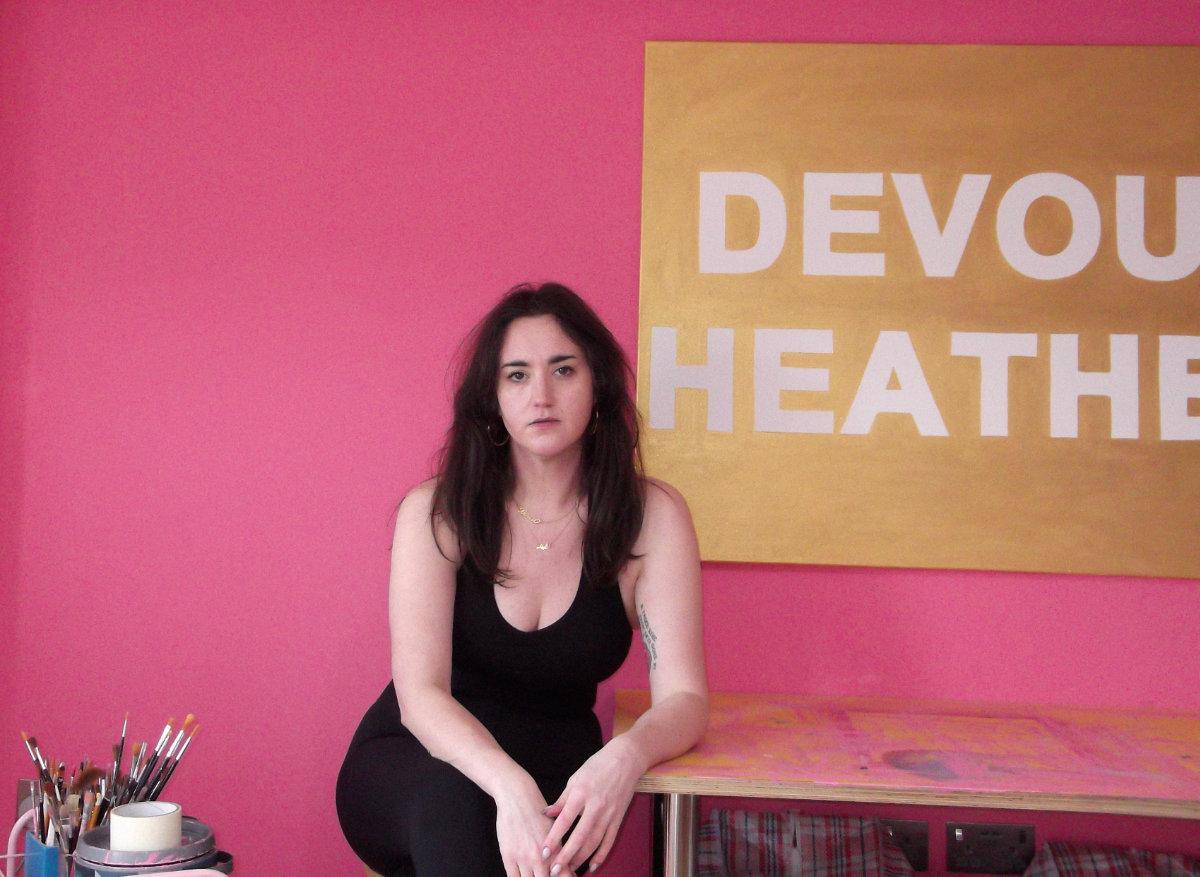
Bold, funny and unapologetically honest, Hells Gibson is a street artist whose distinctive pink-and-gold work turns deeply personal thoughts into powerful public statements. From relationships, rejection and vulnerability to hope, humour and the realities of building a creative career, her words are designed to stop passers-by in their tracks.
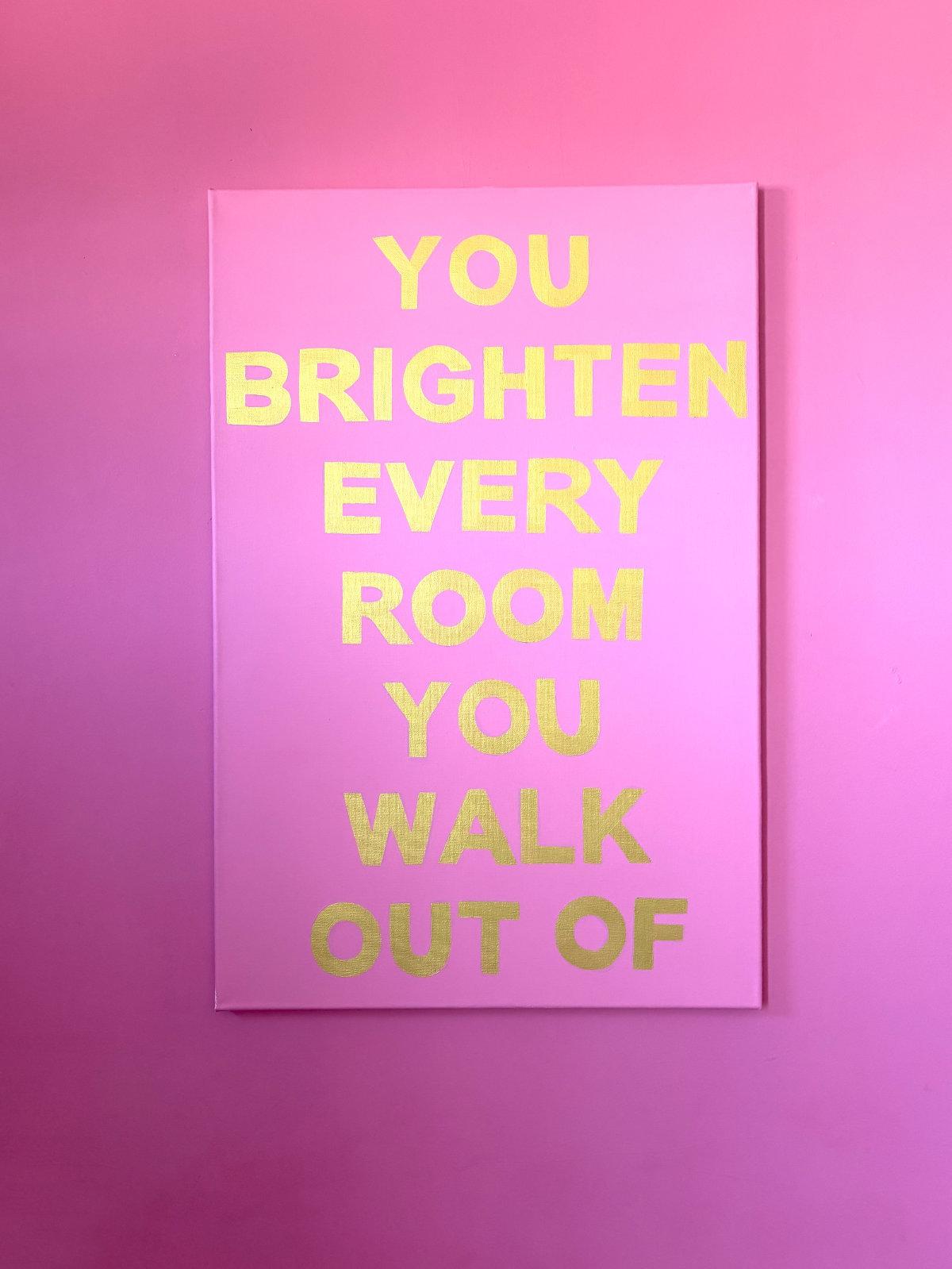
Instantly recognisable for her bright pink backgrounds, gleaming gold lettering and sharply observed phrases, Hells Gibson uses street art to say the things many people think but rarely admit aloud.
We spoke to Hells Gibson about finding her voice as an artist, coping with more than 100 rejections, painting murals across America and why laughter, discomfort and human connection sit at the heart of her work.
When did you first realise that making art could become more than a private creative outlet?
When I did my first paid mural in Fore Street in Upper Edmonton in 2023. Before that I dabbled a bit with street art, some prints, some canvases, but this was the first time I worked with a council and the public in an area of London I wasn’t familiar with. It was the first time I had to take the public’s feelings about their area into consideration and come up with a phrase that represented their pride in living there. It was the first painting that that showed me art can be a creative outlet for the public, not just for me in private.
Was there a particular piece or project that made you feel comfortable calling yourself an artist?
It was a body of work that made me feel that way. In 2024 I made over 40 canvases exploring my relationships with men throughout my life; exes, friends, partners, one-night stands, lovers, ghosters, and everyone in between. I felt I NEEDED to show these works, even though some of them were raw, difficult and very private emotions; it was like the world had to see, and it’s the first time I’d ever felt like that. So, I got an empty flat in the building I have a studio in, put them all up, got a load of cheap booze and invited everyone I could. It was then that I felt like an artist, like it was no longer a hobby, something I do on in my spare time, but something I had to do and share, a necessary and important part of who I am.
Your work has a very recognisable visual identity. How did pink backgrounds and gold lettering become your artistic language?
I guess it stems from the first mural I did, it was in Glasgow as part of my degree show, outside The Vic on Renfrew Street (the old building before they tore it down). I was exploring text pieces for my final project and decided to do a text piece on that wall. I chose pink because it was such a juxtaposition to the grey industrial buildings around, but I can’t remember why I did the text in gold. I guess I liked the un-apologetic shine that gold spray paint added to the words.
When I got back in to painting and exploring text pieces I felt like they should be a continuation from that first piece, that seemed natural and obvious – so I guess the pink and gold stuck!
Do you remember the first phrase you painted that felt completely and unmistakably like a Hells Gibson work?
Oh yes! It was my first canvas:
AN
APPLE
A
DAY
YOU
DIE
ANYWAY
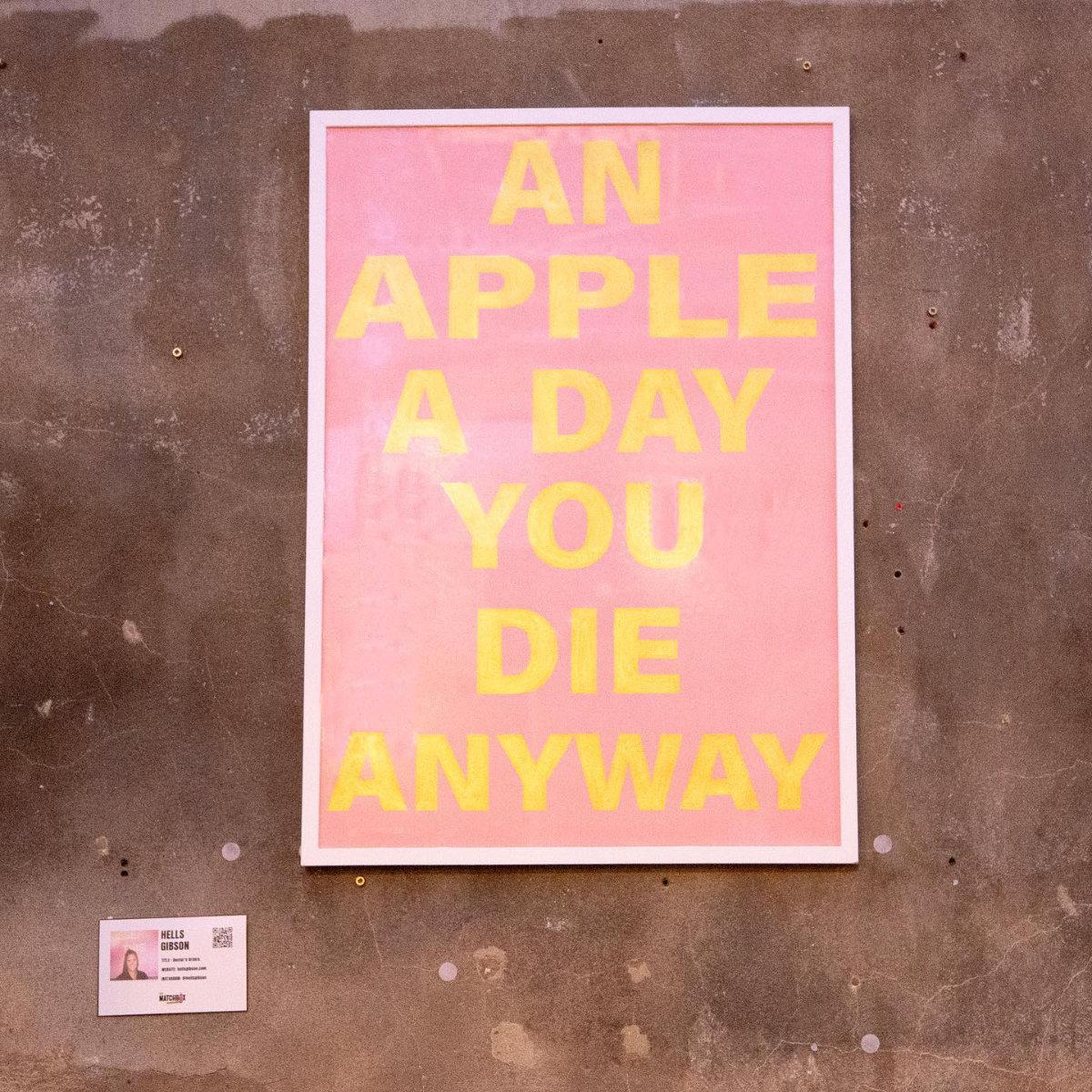
That phrase changed everything and absolutely sums up a Hells Gibson piece by being multi-layered: The familiar saying with a twist to mean something entirely different, the unexpected humour that stops viewers in their tracks and makes them laugh out loud, while also being a sad, brutal truth about the diet culture I am surrounded by as a woman.
How has your background in magazines, picture editing and creative direction shaped the way you compose an artwork?
I spent years working with a vast array of creatives; from the biggest photopapers, designer and celebrities, to completely unknown artists and visionaries, and I learnt something from every one of them. Over time I developed my own creative language; what I like, what I don’t, what interests me, what I’ll never do, and from that my own creativity has bloomed.
Plus, working in magazines trained my eye to see how images communicate before anyone has time to think about them. As a picture editor and creative director, I’m constantly creating visuals that catch people’s eye to read an article or sell a product. I’ve taken that into the art I create, for example, when wheat pasting art over London, I want my posters to stand out from the thousands of other pieces already there, so a strong visual identity is key.
Do you think having too much money or too many resources can sometimes make creative work less interesting?
I wouldn’t know! 😂 I guess there could be an element of laziness that money and resources bring; like just throwing money at a project instead of having to think creatively to get it done. Some of the best ideas I’ve had have come from not having the resources to do what I want to, so having to improvise, which encourages creativity.
But I also think money and resources can be interesting. What does money mean to the artist? How does an abundance of resources affect the art that gets made? What would I be able to create if these things weren’t a restriction? If I had the money and resources, it would shock you to see the work I would make!
Have you ever started a project that seemed completely impossible and surprised yourself by pulling it off?
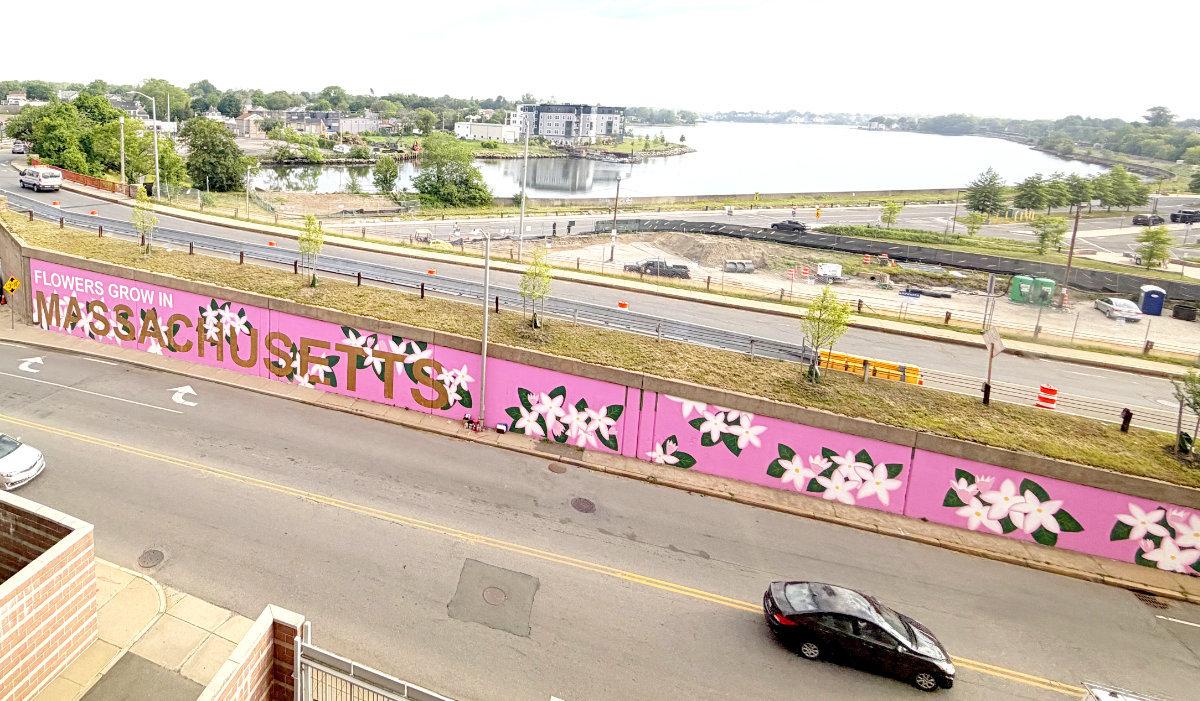
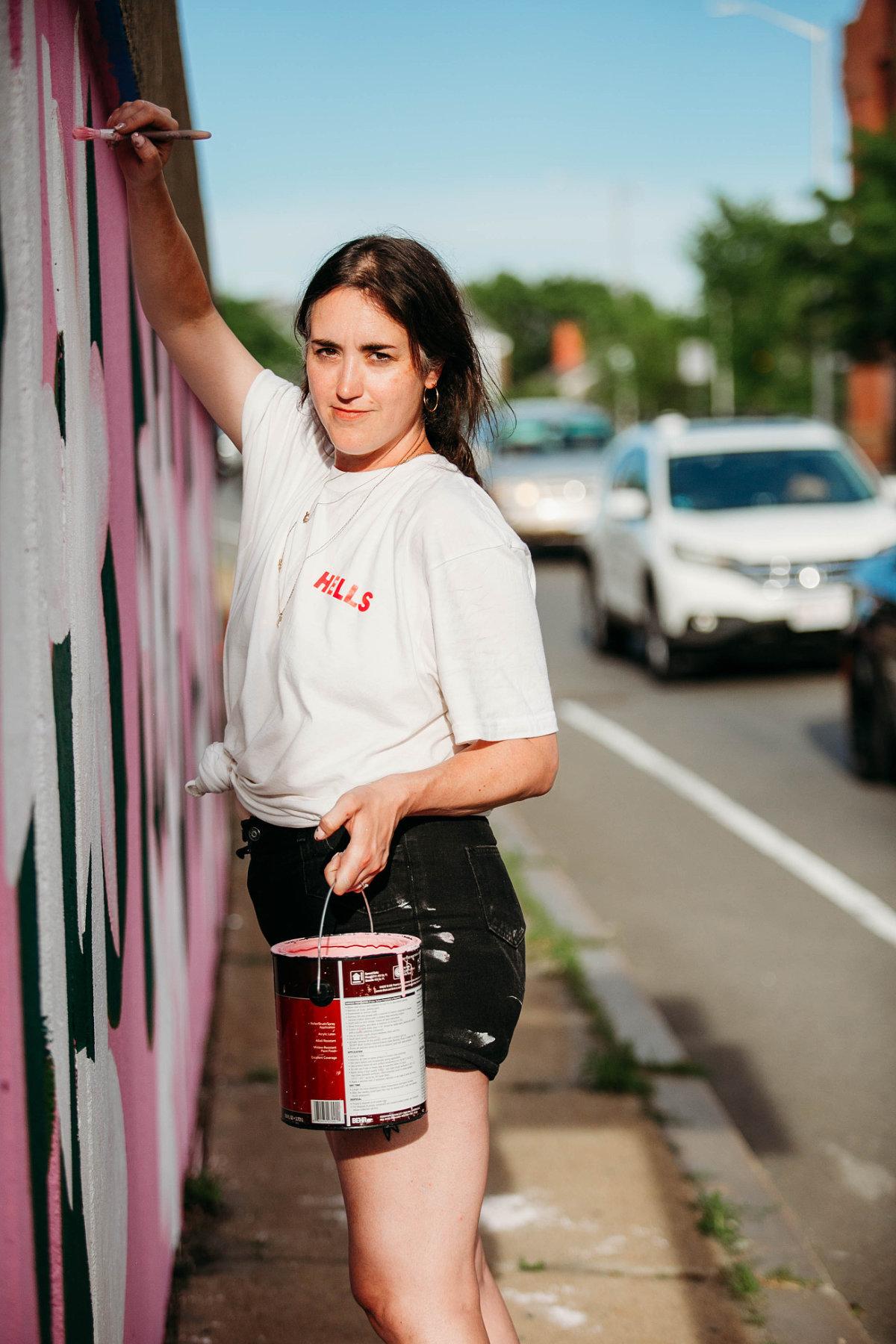
The most recent FLOWERS OF 50 STATES mural in Massachusetts for sure. In fact, that project in general is a constant surprise to me that I am actually doing it. I plan to create a mural in every state of America that features each state’s official flower using my signature pink and gold style. It was an idea I had suddenly, out of the blue and decided to just go for it, less than a year later and I have painted three of the states, and two of the biggest murals I’ve ever done.
The word “hustle” is often romanticised. What does the less glamorous side of building an artistic career actually look like?
Loneliness, frustration, insecurity and bad knees. Being an artist can be romanticised, and this hustle culture that we all feel we need to adopt can be a huge pressure. But building an artistic career means years of no money, rejected applications and long hours that result in nothing tangible. That’s a very hard place to be, but often the most common place to be. For example, since the beginning of this year I’ve had over 100 rejections. Each canvas is a personal, private feeling that I’ve had the balls to put out into the world, which means I put my heart into every piece. So, each rejection isn’t just a no, it’s someone telling me they don’t like my art, which feels like they don’t like my feelings, and therefore me.
Having that feeling over 100 times so far this year, has been soul-destroying; add to that the failed attempts at art I’ve tried making, working 7 days a week, every week with no break and earning not a penny, it’s a very unglamorous daily struggle. And it’s physical! Painting murals has fucked my knees and back, it’s a reminder I’m getting older for sure, which makes me feel like time is running out, and I have so much left to achieve! But (and here’s where my Capricorn soul kicks in) all these feelings have become motivation for me. I’ve developed hard skin and become hard-headed. The more I fail, the more rejections I get, the more I want to prove that I can succeed.
How do you balance making the work you genuinely want to create with the need to earn a living?
I know it’s a struggle that a lot of artists face, but it’s always come easy to me. I’m very over stimulated and my brain thrives when it’s busy. But it also works best with routine, so I structure my week:
Monday – Wednesday: WORK
Thursday – Saturday: MAKE ART
Sunday: HOUSEWORK
Planning my time like this gives me a sense of control which helps me stay calm (did I also mention I have OCD?!), and it’s in this calmness that I can continue to create.
Have you ever felt pressure to make your work more commercial, more polite or easier to sell?
Oh god yeah, several times a week, or day! I question what I’m doing and if I should change my style to make things more ‘sellable’, but what’s sellable in art changes so much, that I can’t keep up. And because I can’t, I don’t.
I know that I can’t create things that I’m not passionate about, I’ve tried and all its lead to is discarded canvases and unfinished pieces. So, after 3 years of doing this, I’m sticking with making the work I want to and hoping someday soon the money starts rolling in.
What can street art achieve that work displayed inside a gallery cannot?
Being seen by EVERYONE. It sounds obvious, but work displayed in a gallery is only seen by people that go into that gallery, but more than that, it is being viewed by people at a time when they have decided to view art. They know they are in a gallery, they are in a headspace to look at art. When art is on the street, it is confronting people in a variety of ways; interrupting people’s days when they least expect it, triggering thoughts, feelings and emotions unexpectantly can cause responses that are genuine and heart-felt. It’s these moments that I love – the raw emotions that my work evokes in people outside of a gallery space.
Have you ever witnessed a stranger reacting to one of your public pieces without realising you were the artist?
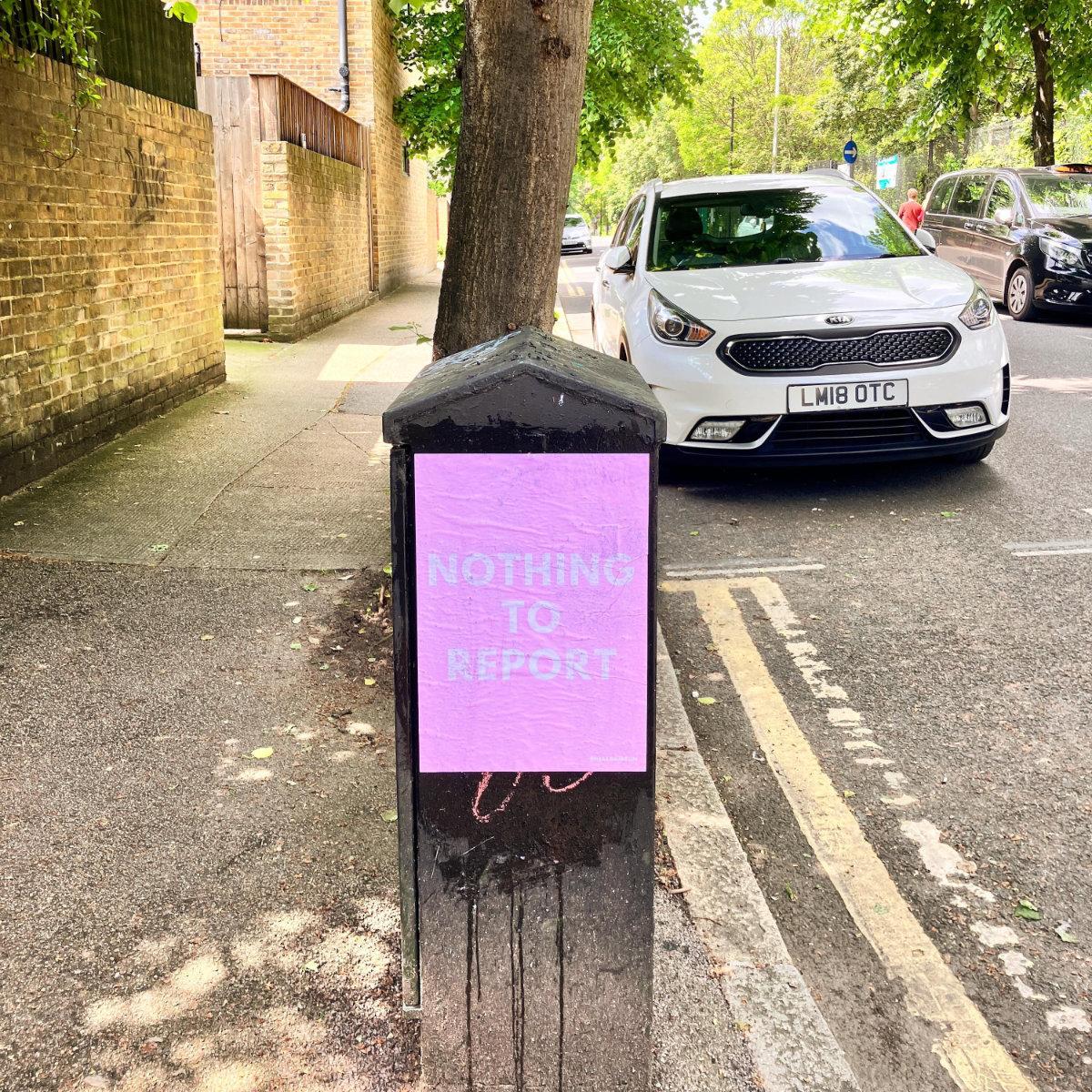
Yes, and I love it! I’ve been at shows where my art is on display and I overhear people say things; I’ve been walking past one of my murals and seen people stop and react. I love all the reactions, the good and bad.
Every time I’ve shown my work, I’ve been pleasantly surprised to see every viewer resonate with several or more of my pieces. I’ve seen grown men cry, women howl with laughter, and strangers strike up conversations triggered by one of my pieces. That’s what it’s all about for me – creating connection with humans.
How do you choose the words or messages that deserve to take up space in a city?
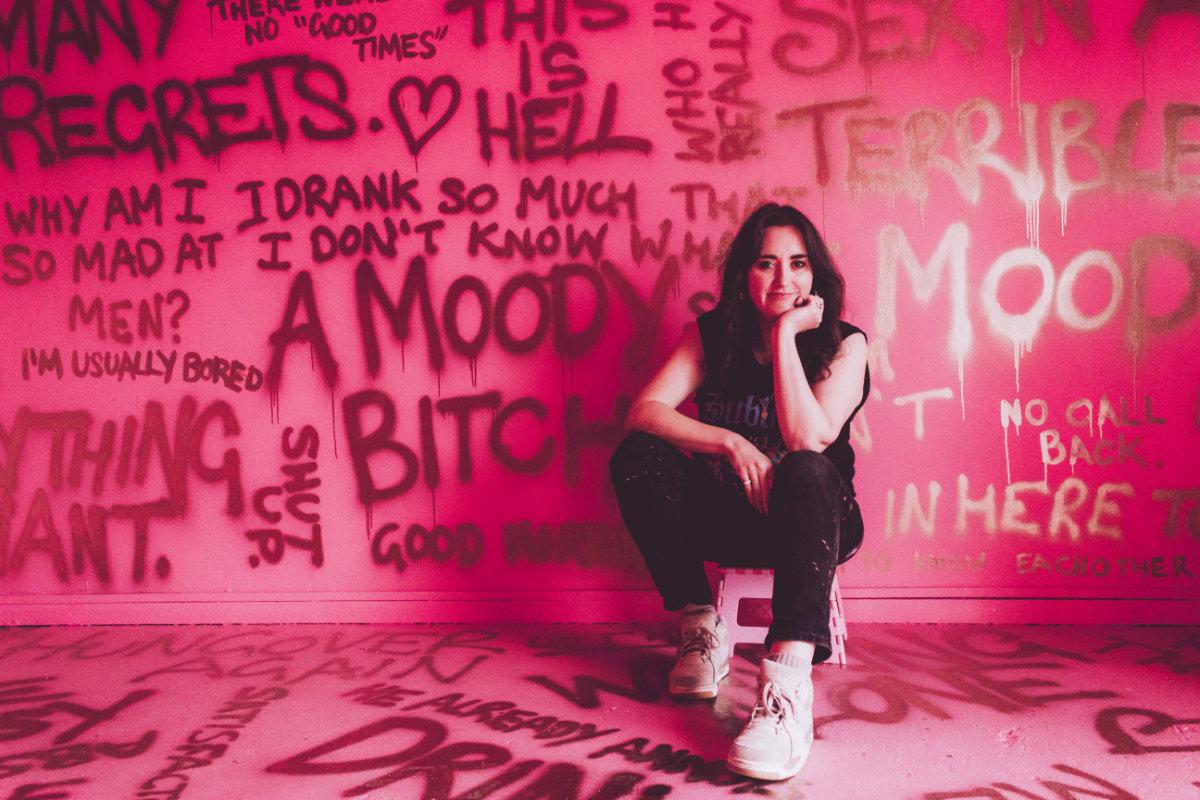
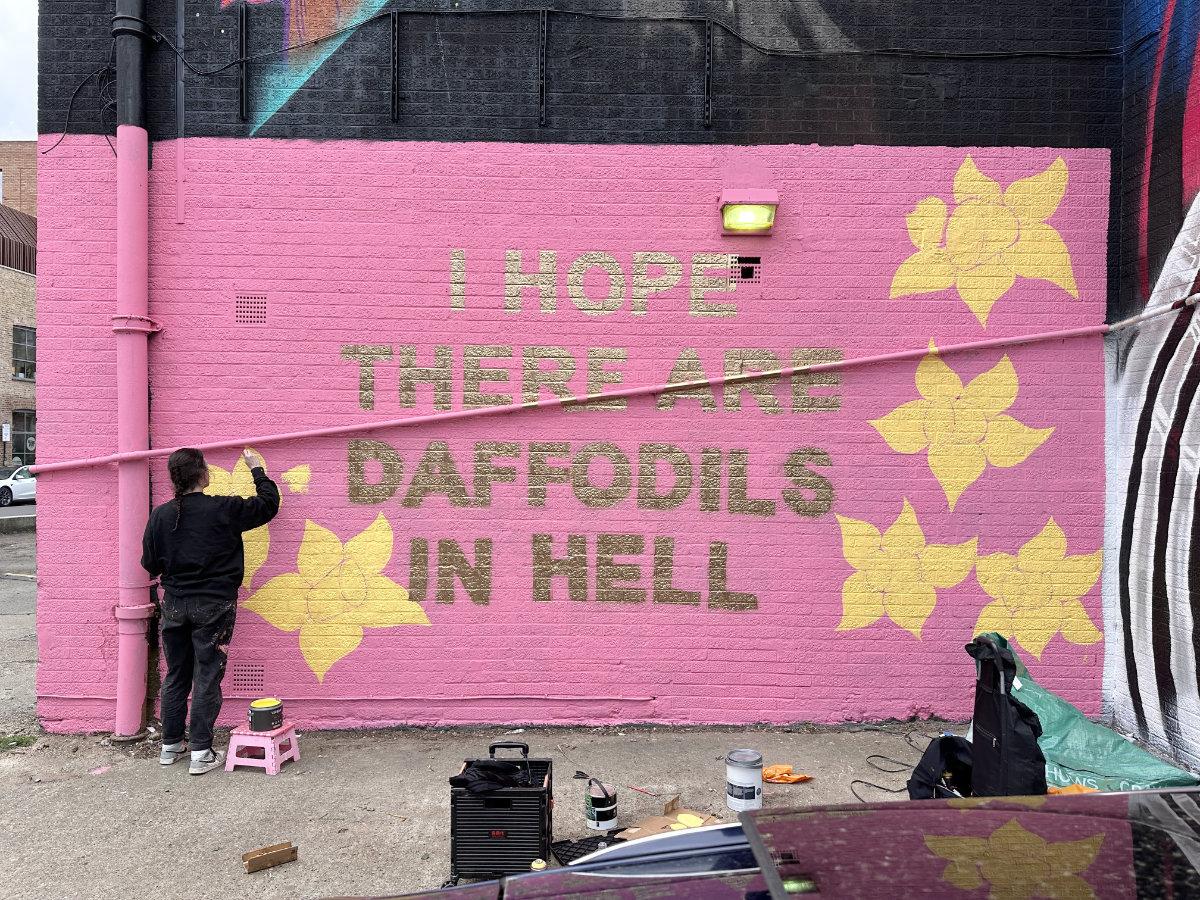
It’s usually a reaction to the environment, be it the city, the building it’s on or the brief for the commission. I find inspiration from everyday life; watching people, listening in to conversations, talking to strangers. I have hundreds of notes in my phone of potential pieces, and sometimes the right space comes along for one of those, or sometimes the space comes first then the idea is born. For my recent wall in Hackney Wick, I was given the space by The Matchbox Collective but had no idea what to create. I had a few phrases I was thinking about, but nothing seemed right. The week before I read a book called “A Short Stay in Hell” by Steven L. Peck, on a train to Scotland to see a friend’s mum for that last time before she passed. And I got thinking about what happens after we die, the context of life and what people need when their time comes to an end. Redemption? Clarity? Love? Forgiveness? Hope? On that same train journey I watched scenery fly by, the sea, hills, rain clouds, trees, cities, and daffodils, lots and lots of daffodils. I love daffodils, they symbolize new beginnings, rebirth, and joy; and with their blooming in the early spring, just after winter, they represent hope. So when I approached this wall, I knew I wanted to channel a lot of the thoughts and feelings I was dealing with, using my clean crisp typeface to juxtapose with the drippy, messy flowers. It was the first time I’ve done a piece like that, and it opened up a whole new load of ideas.
Do you see your positive messages as reassurance, protest or both?
I see them as both. My work is about offering reassurance to people who may feel unseen, overwhelmed, or disconnected, while also quietly protesting the systems and narratives that create those feelings in the first place. The positive messages aren’t about ignoring reality, they’re about reclaiming hope as a form of resistance. For me, optimism can be both comforting and radical.
Your work can appear bold and playful while addressing relationships, vulnerability and rejection. Is humour a form of emotional protection for you?
No, quite the opposite, humour is a form of emotional connection for me. It creates an opening where people can lower their guard and engage with ideas or emotions they might otherwise avoid. My work often balances playfulness with more vulnerable themes because I think laughter can encourage honesty. Rather than using humour as emotional protection, I use it as a way of inviting people to drop their guard, share an experience, recognise something of themselves, and connect through both the lightness and the complexity of being human.
Has making deeply personal work changed the way you understand your past relationships?
Yes, it’s like therapy for me. I process a lot of past relationships, feelings and experiences through making my art. I journal every morning, and that writing often leads to revelations about my own behaviour or feelings.
The canvases I make are an extension of that journaling, or perhaps a reduction? Each canvas pinpoints a specific moment that a complex feeling boils down to. For example, I painted the piece “Finite” on the last day of a three month stay with my long-distance partner. We were struggling with the idea of leaving each other; I was needing closeness while his reaction to the upcoming separation was to pull away, so feelings were getting messy. But ultimately, it all boiled down to this; HOLD ME WHILE I’M HERE and we’ll deal with the rest later.
Are there subjects you still feel unable—or unwilling—to turn into art?
Anything that is someone else’s story or feeling to tell. I have often wanted to write or make pieces about relationships that focus on what happened, in some way of trying to get revenge, or ‘set the story straight’, but there are two sides to every story, then the truth. So, I only make work that is about how I feel about a situation, person or relationship, not how I think things happened, who was right, or who was wrong.
There are some subjects that I am still uneasy about turning into art, some relationships that are still too painful for me to process. But I know there will come a time when I am able to, and I am looking forward to seeing the art I produce once I’ve done the work to get there.
What makes a group exhibition feel like a genuine community rather than simply a collection of individual works?
That comes from the curation. Often themes can be vague, but if the curation is also vague the show can feel weak. I always like shows that have a clear theme, I like seeing how different artists approach a specific theme, it’s such a good way of showing how art manifests in different people.
You are moving into stained glass, sculpture, reclaimed street signs and found objects. What can these materials express that canvas cannot?
With a canvas you’re starting with a totally blank surface, the possibilities are endless. With reclaimed surfaces, you must respond to something that already exists. Every dent, layer of paint, scratch or weathered edge carries its own history, so the process becomes a collaboration rather than complete control. I love that these materials have already lived a life before they reach me. I found a canvas on a street in Camden, a black canvas with a 3D Jesus on a cross on it, when I got it back to my studio I responded to it immediately; what does this represent? What are my feelings towards this Religious Iconography? How do I respond to it? Within 10 minutes I had repainted it and come up with the piece “THE DISMOUNT”
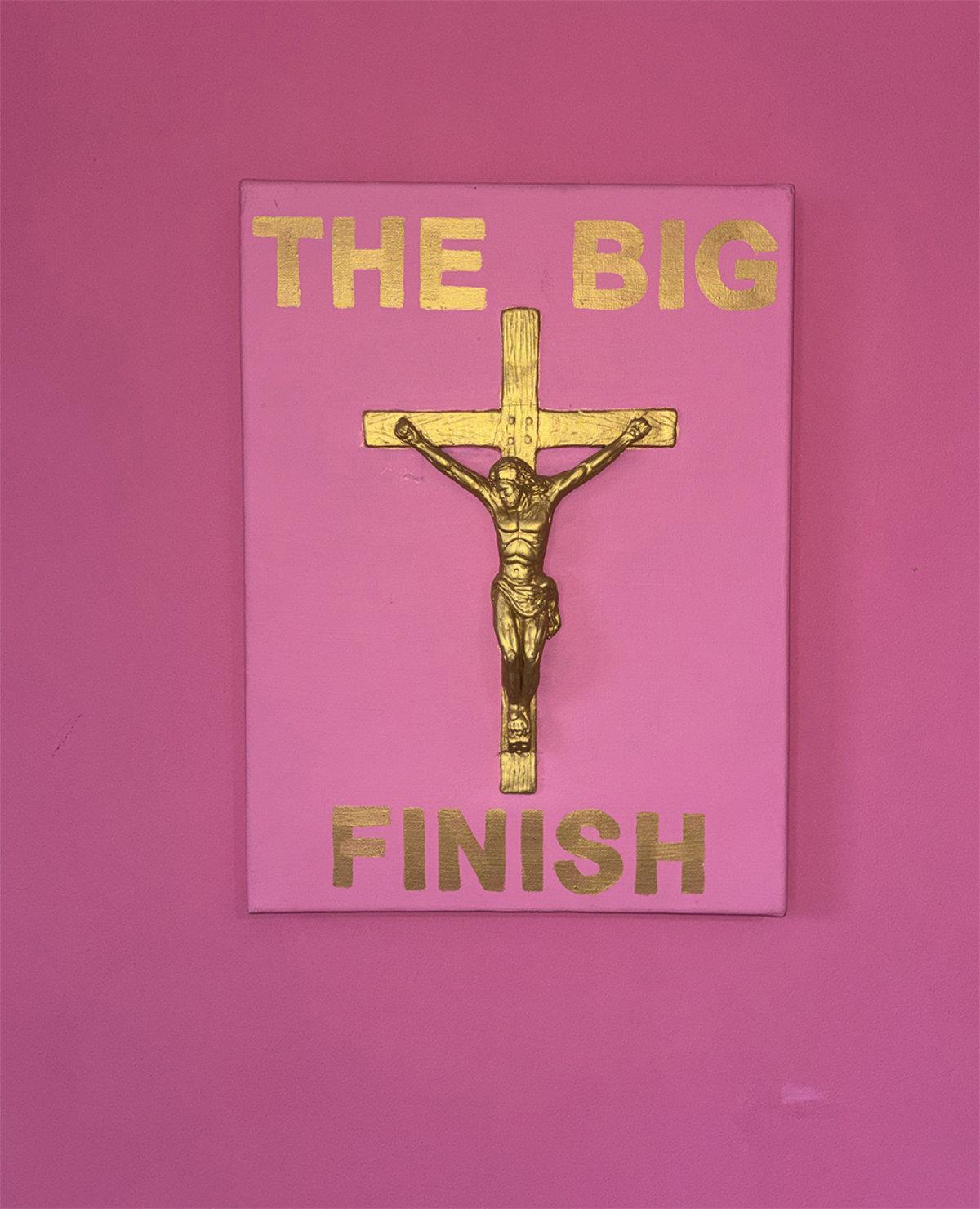
Will the familiar pink-and-gold aesthetic remain when the subject matter becomes darker?
Absolutely. Pink and gold have become my brand, so much so that I get sent work by other people asking if it’s mine just because it has a little of those colours in!
I present raw, real emotion and pain in controlled, contained text that is made even more jarring by the garish pink and shiny gold. As the subject matter evolves, the palette may evolve with it, but those colours will always have a place. I think the darker the material gets, the brighter my colours will become.
Is there a particular building, neighbourhood or public space you dream of transforming?
A brothel. It’s a space that’s seen so much life, stigma, intimacy and contradiction, and I think there’s something powerful about a place like that. I’d want to honour the stories held within its walls while celebrating the women who have made those spaces.
Are there any artists, architects, musicians or fashion designers you would love to collaborate with?
I’m fascinated by songwriters and poets; I don’t understand how people come up with such beautiful words. I’d love to sit down with some of my favourite songwriters like John Moreland or Margot Ciker and come up with pieces of text after long conversations over wine with them.
Which rule do you most enjoy breaking?
The rule about the things you’re not supposed to say out loud. I’m always drawn to the uncomfortable conversations, the thoughts people have but rarely admit, and the emotions we tend to hide behind politeness or perfection. I think there’s a lot of freedom in bringing those things into the open. Once they’re spoken about, they lose some of their power, and that’s where real healing can begin.
What phrase would you place on a billboard that everyone in the country had to pass?
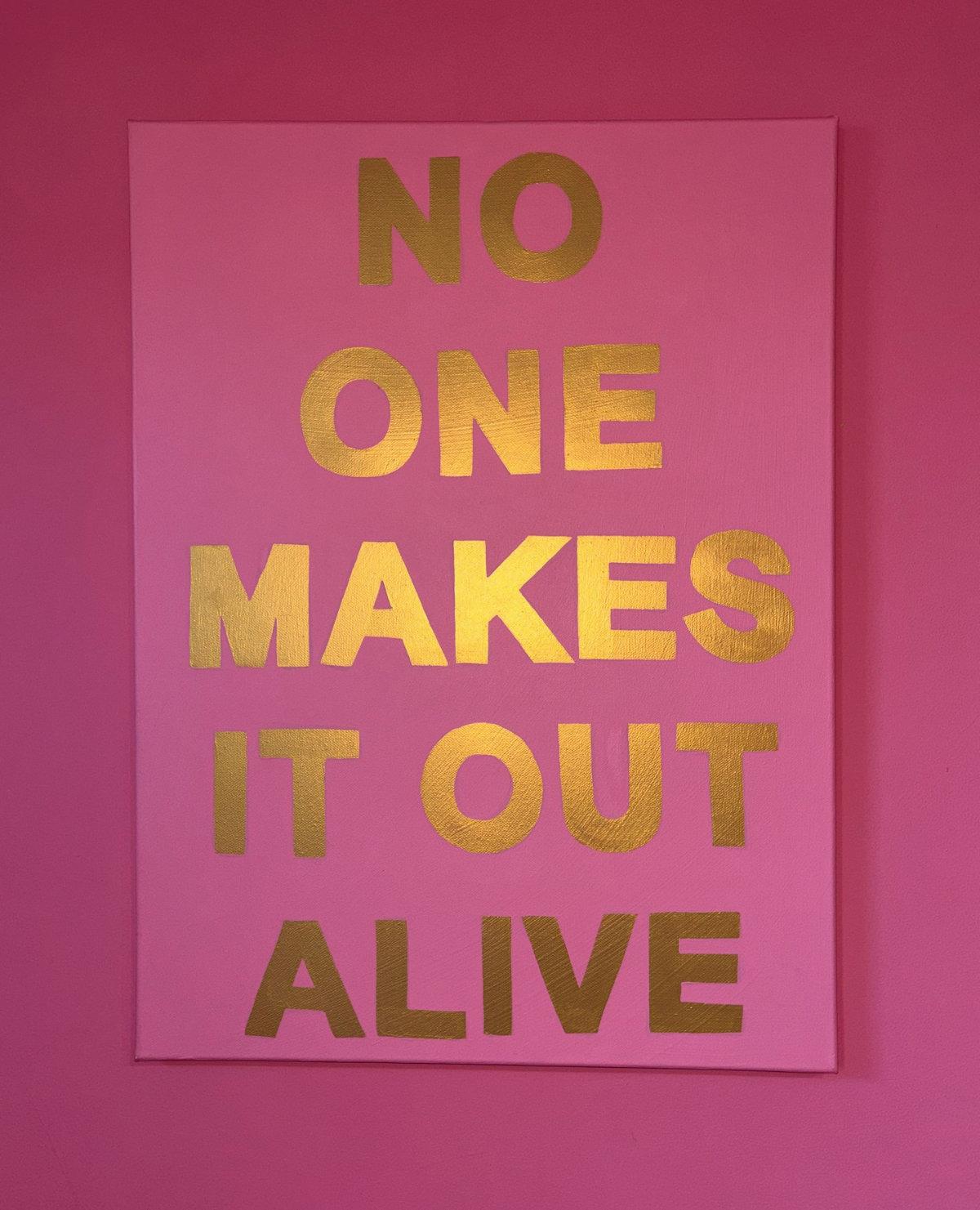
NO ONE MAKES IT OUT ALIVE
It’s a reminder that no matter what happens, we’re all going to die. That sounds depressing, but it’s not – it’s freeing! You can live your life however you want, nothing really matters.
Which piece of your own work would you keep if you could save only one?
“Doctors Orders”
It was the first piece I made that started this whole thing… so it’s the piece that is to blame or thank for all this!
Please check out the website for Hells Gibson and give her shop some support!

Be the first to comment