
 Emma Mykytyn
 The Frankfurt Kitchen: The Design That Changed Modern Homes
Long before the fitted kitchen became a familiar part of everyday life, Austrian architect Margarete Schütte-Lihotzky created a compact, practical and highly organised space that would help shape the modern home.
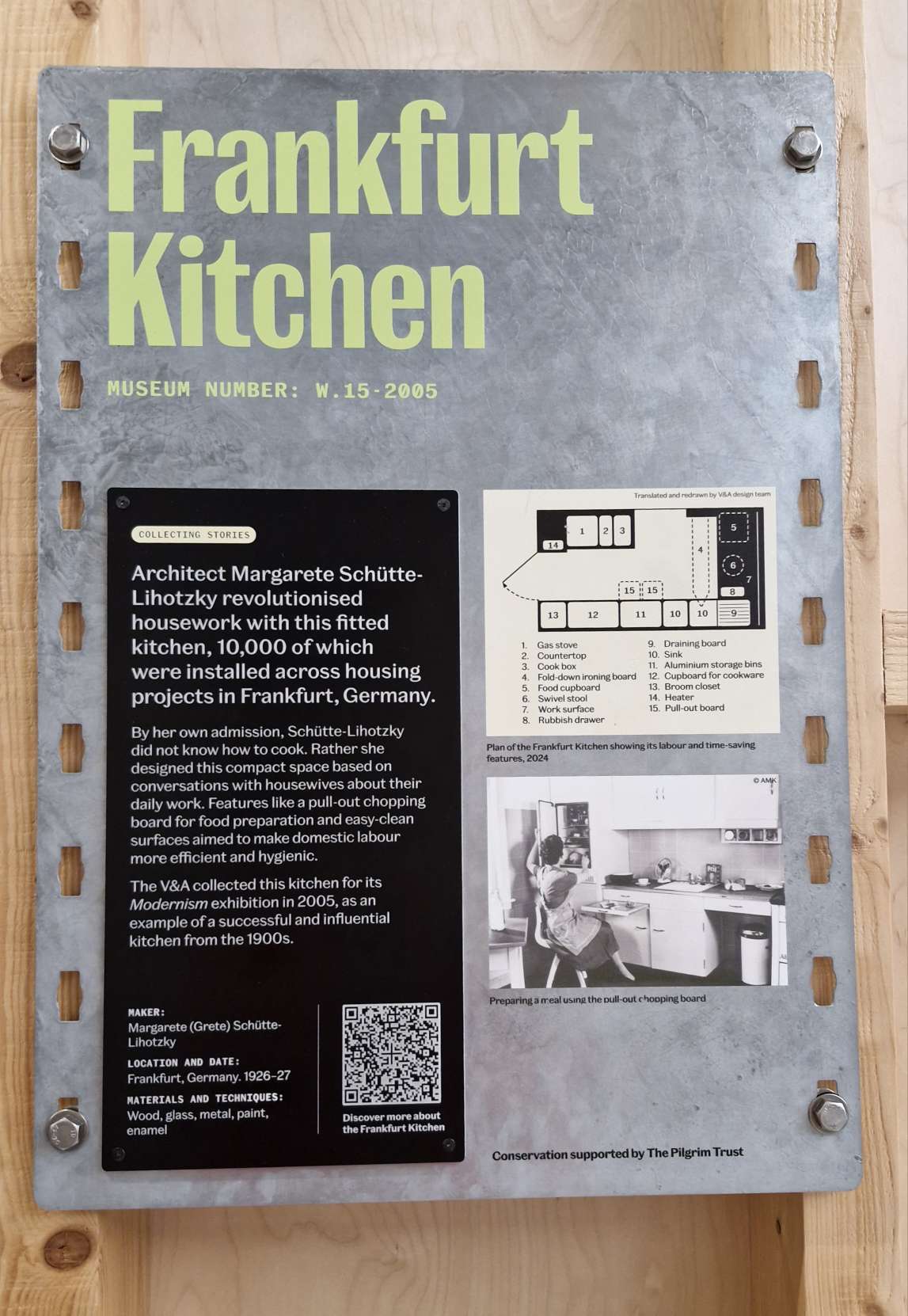
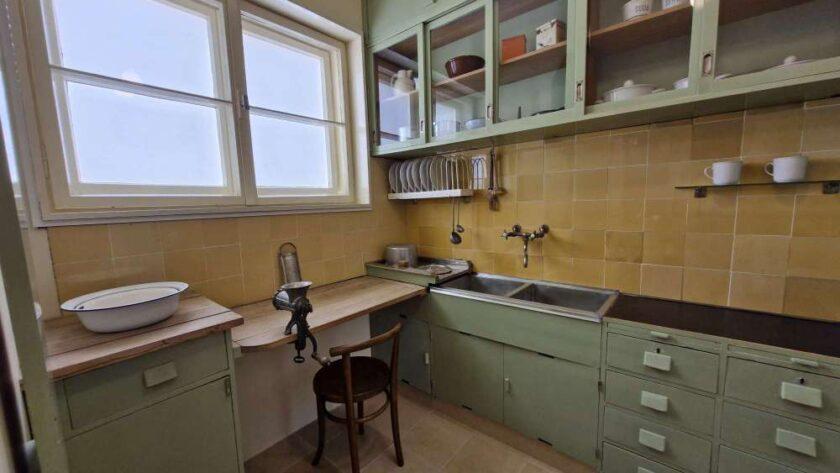
Designed in 1926 for social housing in Frankfurt, Germany, the Frankfurt Kitchen is now seen as one of the most influential kitchen designs of the twentieth century. Built as part of architect Ernst May’s ambitious “New Frankfurt” housing programme, it brought together efficiency, hygiene and clever storage in a way that felt completely new.
A Kitchen Designed for Modern Living
After the First World War, Germany faced a serious housing shortage. Frankfurt responded with thousands of new apartments, and Schütte-Lihotzky was asked to design a kitchen suitable for compact urban homes.
Rather than treating the kitchen as a decorative room, she approached it as a practical workspace. She studied how people cooked, cleaned and moved around the room, then designed a layout that reduced wasted steps and made everyday tasks easier.
Inspired by Railway Dining Cars
One of the key inspirations for the Frankfurt Kitchen was the efficient layout of railway dining car kitchens, where every inch of space had to work hard.
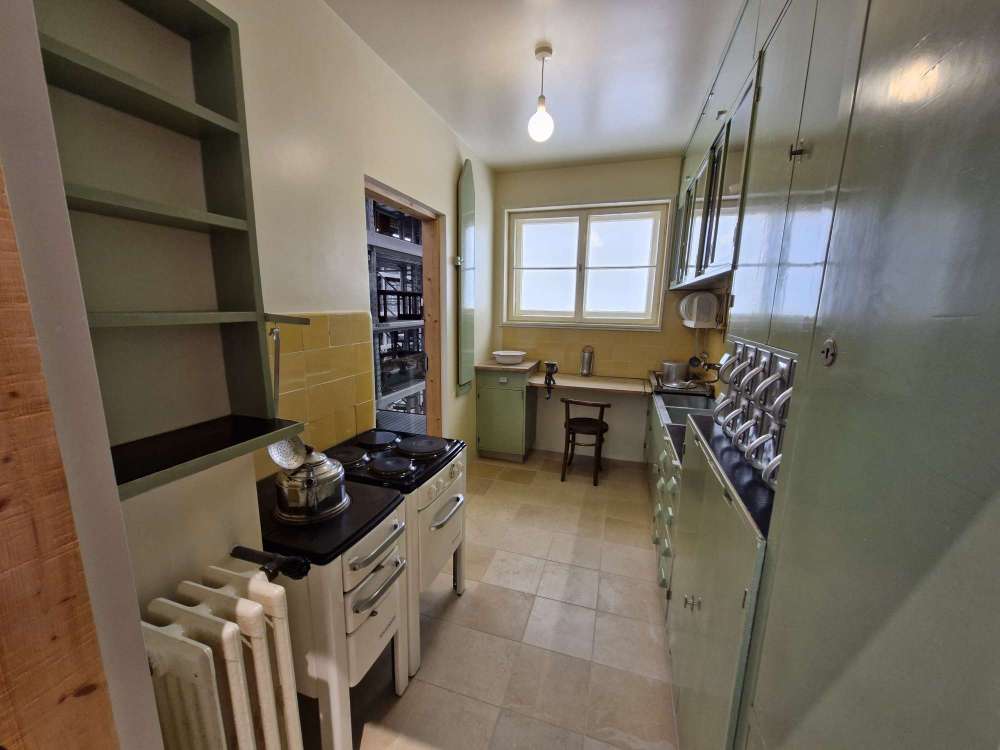
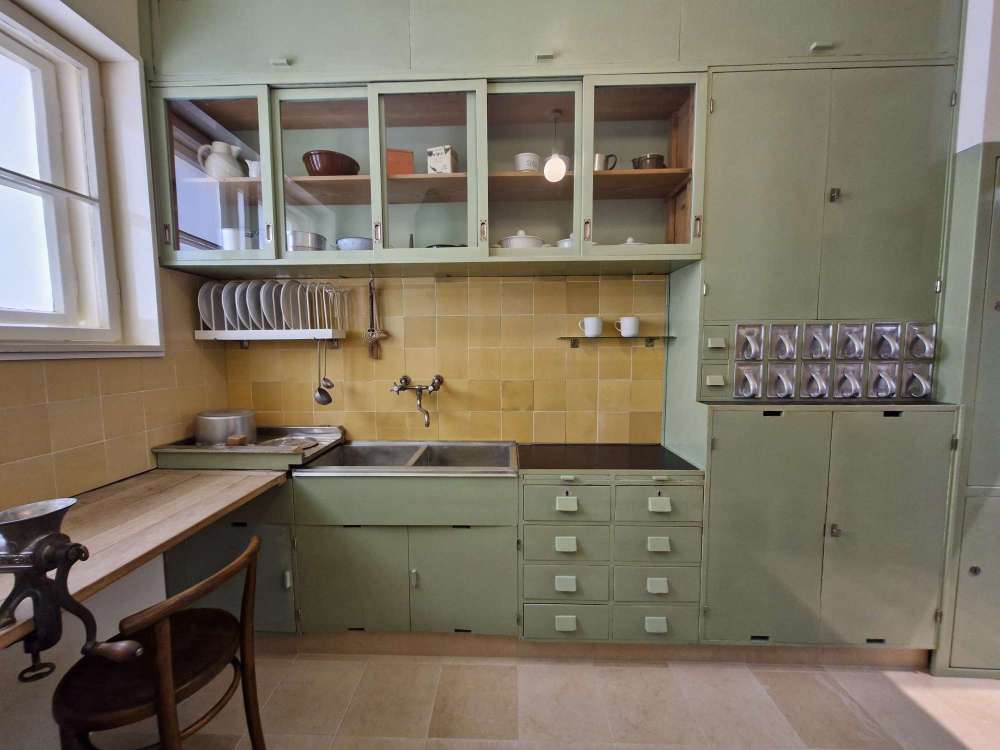
The result was a narrow, fitted kitchen with built-in cupboards, continuous work surfaces, dedicated storage, a sink, stove area and preparation space all arranged for maximum efficiency.
Find out about the world’s first ATM

Why the Frankfurt Kitchen Was Revolutionary
Many features that now seem normal in modern kitchens were radical at the time. The Frankfurt Kitchen included:
- Built-in cupboards and fitted storage
- Pull-out work surfaces
- Aluminium containers for dry goods
- Clearly organised preparation, cooking and washing areas
- Easy-clean surfaces for better hygiene
- A compact layout designed to save time and movement
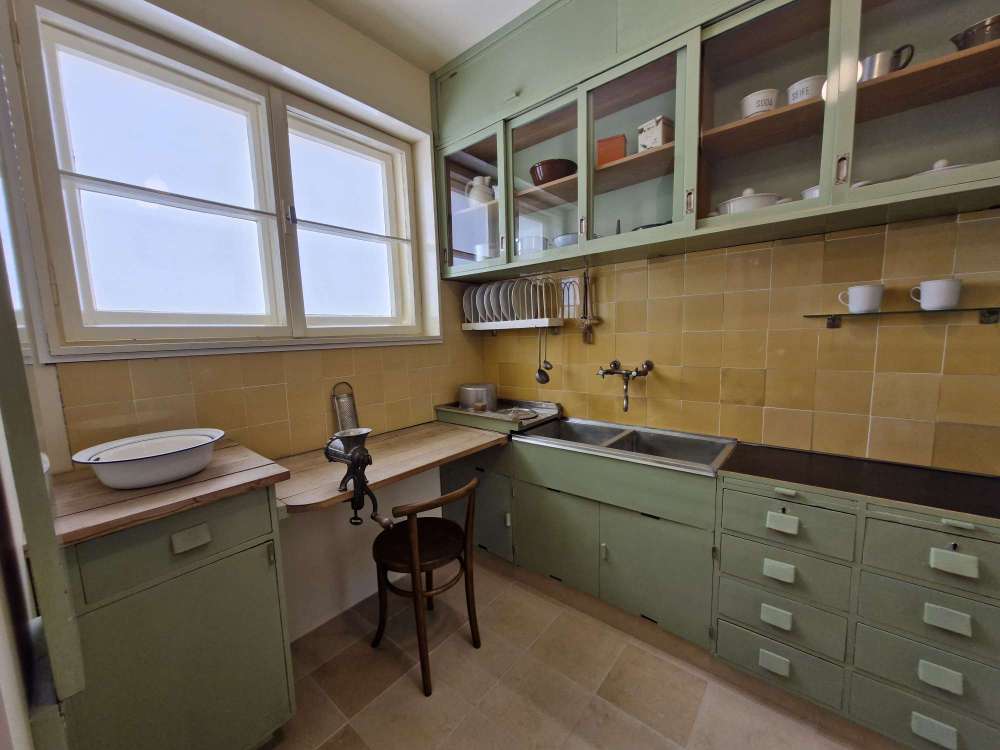
It was not a large or luxurious kitchen, but that was the point. It was designed to make small-space living more practical, especially for working-class families moving into modern apartments.
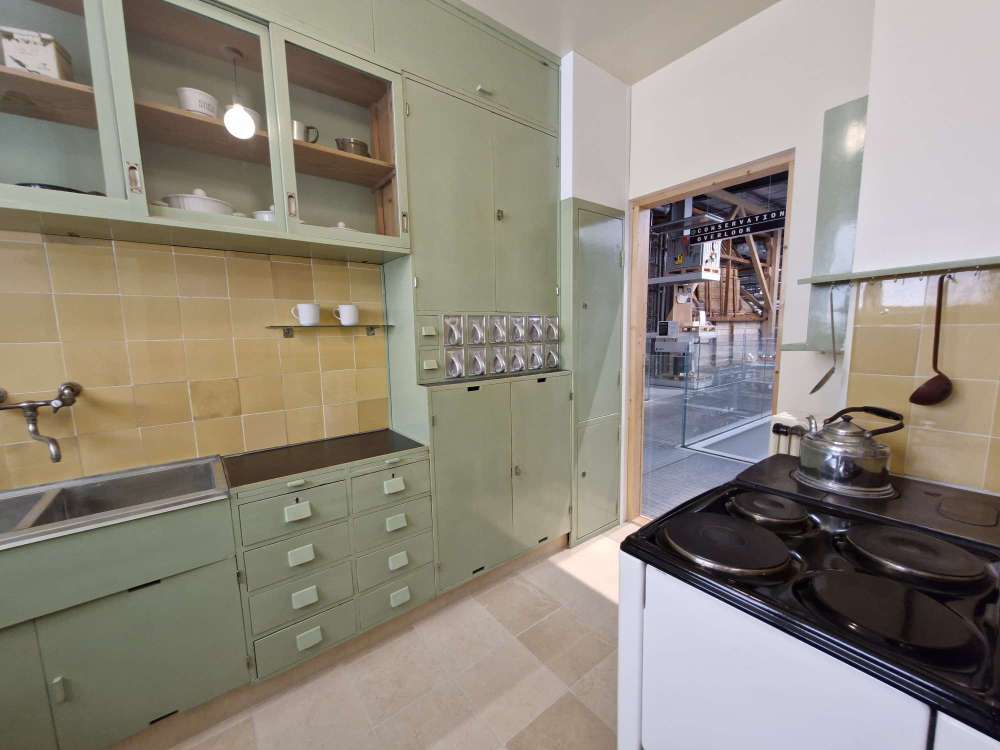
The First Mass-Produced Fitted Kitchen
Around 10,000 Frankfurt Kitchens were installed in homes across Frankfurt during the late 1920s, making it one of the earliest examples of a mass-produced fitted kitchen.
Its influence soon spread far beyond Germany. The idea of a kitchen as a carefully planned, efficient workspace became a foundation for modern domestic design.
Margarete Schütte-Lihotzky’s Legacy
Margarete Schütte-Lihotzky later revealed that she had very little personal experience of cooking before designing the kitchen. Instead, she relied on research, observation and conversations with women who used kitchens every day.
That attention to real domestic routines is part of what made the Frankfurt Kitchen so important. It was not just about style. It was about how people actually lived.
What to see and do in Düsseldorf

Where to See the Frankfurt Kitchen Today
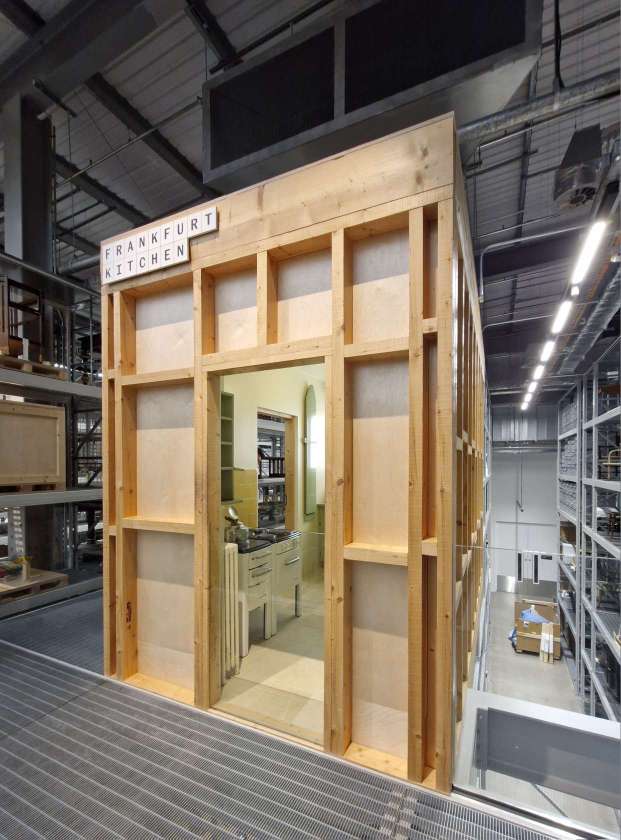
The V&A acquired an original Frankfurt Kitchen in 2005, recognising its importance as one of the most significant interior designs of the modern age.
Why It Still Matters
Almost a century after it was created, the Frankfurt Kitchen still feels surprisingly familiar. Every fitted cupboard, organised drawer, built-in worktop and compact modern kitchen owes something to Schütte-Lihotzky’s pioneering design.
It may have been small, but its impact on the way we live at home was enormous.
Where
V&A East Storehouse
Parkes Street, Queen Elizabeth Olympic Park, Hackney Wick, London E20 3AX
Opening times
Daily: 10.00 – 18.00
Thursday and Saturday: 10.00 – 22.00
Closed 24 – 26 December
Admission is free
Transport to V&A East Storehouse
V&A East Storehouse main entrance is on Parkes Street, E20 3AX, located inside the Here East building.
Hackney Wick Overground is 0.3 miles away
Stratford station is 0.9 miles away
Stratford International is 0.8 miles away
388 bus route stops outside Here East. Here East bus shuttles run from Stratford stations Monday-Friday, every 10 minutes 6:30am to 9pm
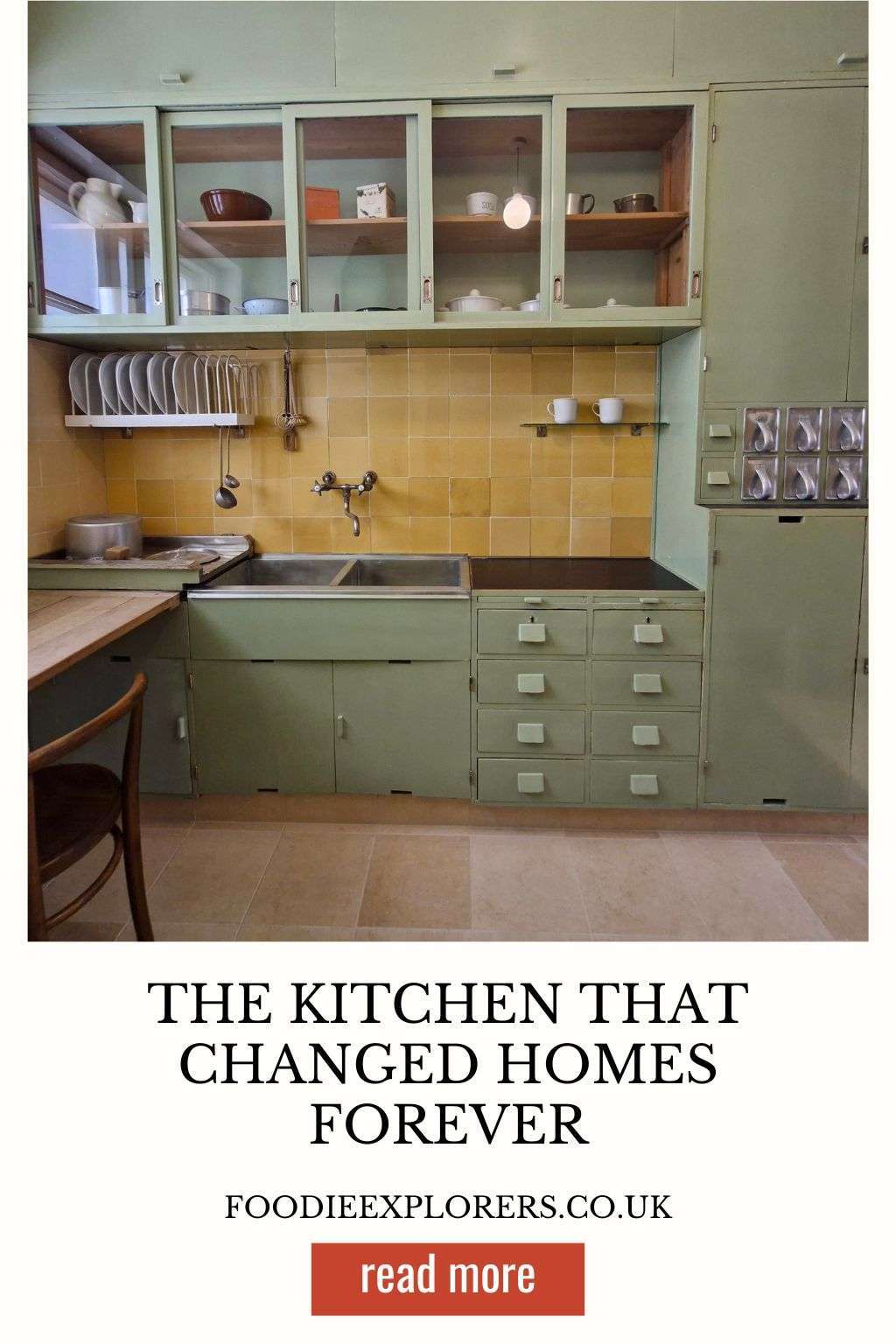








Really fascinating how the Frankfurt Kitchen focused on efficiency long before modern interior design trends existed. It’s interesting to see how much today’s compact kitchens still borrow from this concept. A great reminder that good design is often timeless