Stranraer Oyster Festival 2026: Billions of Baby Oysters Signal Bumper Year for Loch Ryan
Billions of Baby Oysters Signal Bumper Year for Loch Ryan Ahead of Stranraer Oyster Festival
Loch Ryan could be welcoming a bumper new generation of wild native oysters after one of the biggest spawning events ever recorded in the sea loch.
The encouraging discovery comes just days before Stranraer Oyster Festival 2026, which takes place from Friday 11 to Sunday 13 September on the waterfront at Stranraer.
Around a third of Loch Ryan’s estimated 23 million native oysters were found brooding larvae at the same time in June, something the fishery says it has never recorded before.
With each native oyster capable of carrying around one million larvae, it is thought that trillions of baby oysters may have been released into Loch Ryan within just a few days.
Even better news has now arrived: young oysters have successfully settled on specially prepared collectors placed around the loch.
Bumper spawning season for Loch Ryan oysters
The unusually large spawning event was discovered in June while the Loch Ryan Oyster Fishery team was installing collectors designed to catch oyster spat, the name given to newly settled baby oysters.
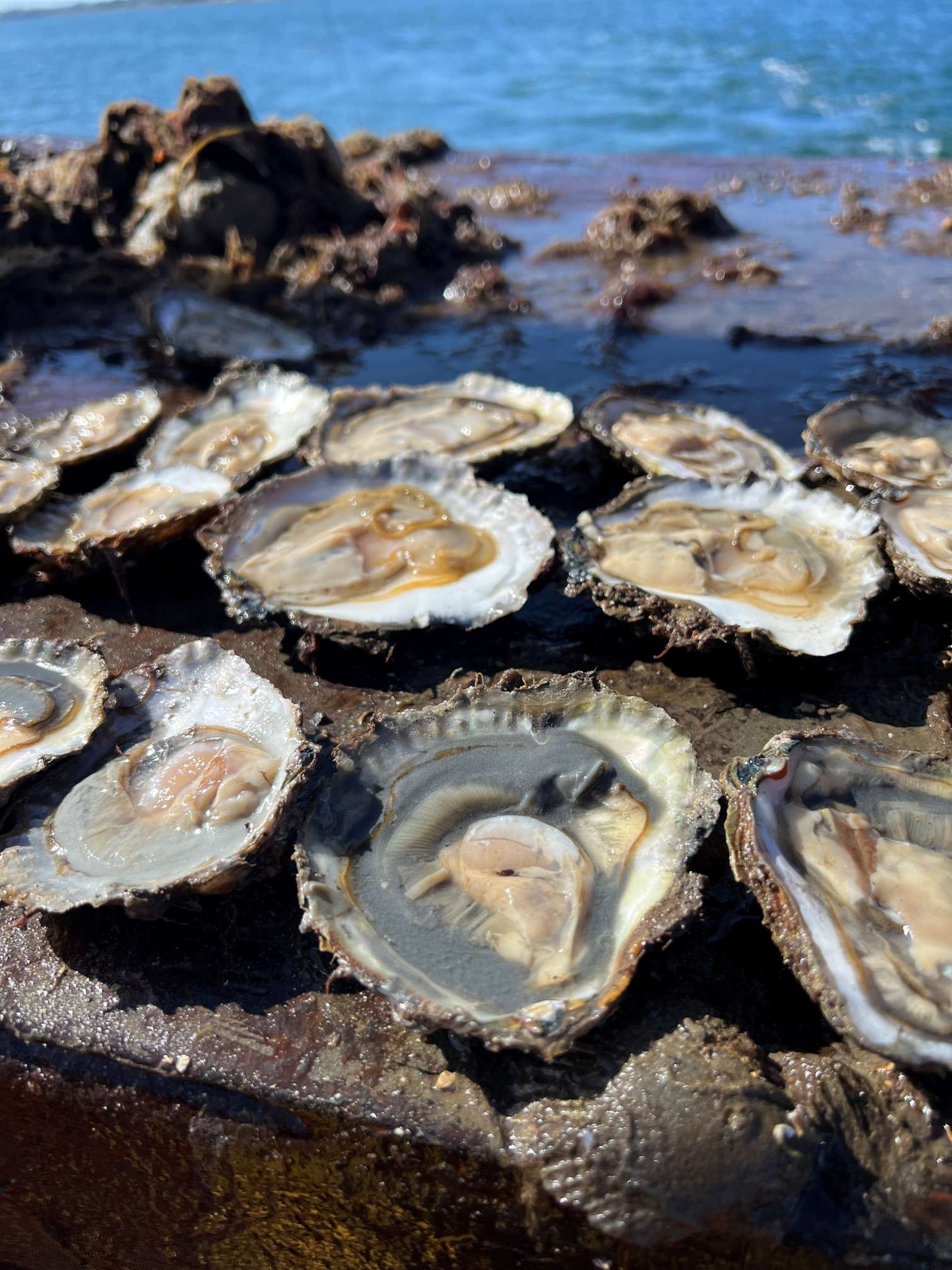
Around 30% of oysters sampled at the time were brooding larvae simultaneously, their flesh turning a characteristic milky grey.
Loch Ryan Oyster Fishery Director Tristan Hugh-Jones said the scale of the event immediately stood out.
“A native oyster only carries its larvae for around three days before releasing them into the sea, so to find a third of the sample brooding at exactly the same moment leapt out at us.
“We have simply never seen this proportion of Loch Ryan oysters spawning simultaneously in such numbers before.”
Loch Ryan is estimated to contain around 23 million native oysters, according to a stock assessment undertaken by Professor Bill Sanderson of Heriot-Watt University for the Solway Coast and Marine Project.
If roughly seven million oysters were spawning at the same time, with each potentially carrying around a million larvae, trillions could have entered the loch around 10 June.
Baby oysters are already settling
Native oyster larvae spend around ten days swimming freely in the water before settling onto the seabed.
To survive, they need to attach themselves to a firm surface, ideally an existing oyster shell.
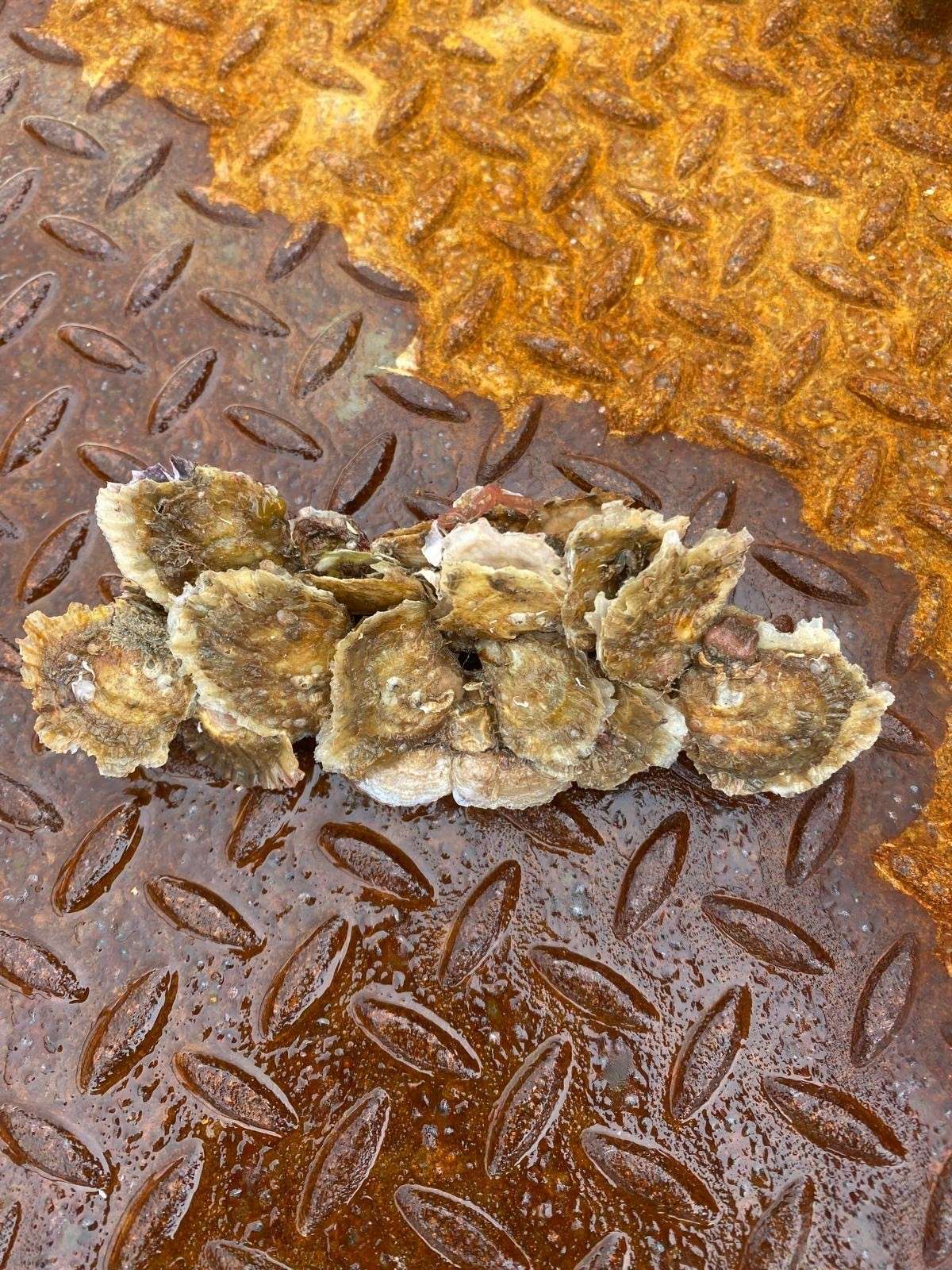
Loch Ryan’s sheltered geography gives the larvae an advantage, helping prevent them from being swept out to sea and increasing the likelihood that they will settle within the loch.
To discover where the larvae were landing, collectors were positioned at several locations.
These included stacked plastic plates known as coupelles, traditionally used by oyster farmers, alongside concrete blocks coated with lime and laid directly onto the seabed.
The lime provides a hard, shell-like surface on which larvae can attach.
When the collectors were inspected in early September, the lime-coated blocks had performed particularly well, with hundreds of young oysters already visible on their surfaces.
Tristan said:
“Native oysters need to settle on a firm, shelly surface, and the lime gives them exactly that.
Taken together with what we saw in June, the bed this summer looks to be in the healthiest state it has been for a very long time.”
Did the marine heatwave trigger early spawning?
The spawning event also occurred considerably earlier than usual.
Oysters in Loch Ryan began spawning around three to four weeks ahead of their normal timetable, with this year’s marine heatwave thought to be a possible reason.
Warmer water temperatures can influence oyster breeding behaviour, although the longer-term impact of changing sea temperatures on native oyster populations remains closely monitored.
For now, the successful settlement of young oysters is being viewed as a very positive sign for Scotland’s last remaining wild native oyster fishery.
Why Loch Ryan oysters are so important
Loch Ryan is regarded as one of Europe’s most important surviving native oyster beds.
The native oyster, Ostrea edulis, is different from the more commonly farmed Pacific or rock oyster. It is slower growing, has a flatter shell and is prized for its delicate, complex flavour.
Native oyster beds were once widespread around the coasts of Britain and Europe but have suffered dramatically through overfishing, habitat loss, pollution and disease.
Loch Ryan is now regarded as one of the most significant remaining populations.
The fishery is managed using conservation principles, with approximately 95% of each catch returned to the loch.
The oysters also help support native oyster restoration schemes elsewhere in the UK.
Tristan explained that the commercial fishery and conservation work are closely linked.
“People sometimes assume conservation and fishing pull in opposite directions, but in Loch Ryan they’re the same thing.
“The oysters we sell are what allow us to manage the bed in the way we do, returning 95% of what we catch and monitoring the population.”
He added that anyone eating a Loch Ryan native oyster at Stranraer Oyster Festival is helping support the ongoing management of the historic oyster bed.
Stranraer Oyster Festival 2026
Visitors will have plenty of opportunities to try Loch Ryan native oysters when Stranraer Oyster Festival returns from 11 to 13 September 2026.
The community-run festival takes over Stranraer’s waterfront, just a short distance from the oyster beds themselves.
Freshly shucked Loch Ryan oysters will be served throughout the weekend, alongside cooking demonstrations, talks, live music, local food and drink, family activities and the return of the fiercely competitive Scottish Oyster Opening Championship – the ShuckOff.
Celebrity chefs return to Stranraer
The 2026 festival also has its biggest celebrity chef programme to date.
Appearing during the weekend will be:
– Matt Tebbutt, presenter of BBC’s Saturday Kitchen
– Rosemary Shrager
– Tony Singh
– Julie Lin
Every celebrity chef who appeared at the festival in 2025 has chosen to return for 2026.
Demand has already been strong, with additional Saturday demonstrations featuring Rosemary Shrager and Tony Singh added after their original sessions sold out.
Sunday’s programme includes A Taste of Galloway, with Rosemary Shrager and Julie Lin cooking with ingredients from across the region.
Produce featured will include Loch Ryan venison, honey from Walled Garden Honey Co, Galloway cheese and whisky from Galloway Distillery.
The festival’s cooking programme will finish with a Celebrity Cook-Off featuring Matt Tebbutt and Julie Lin.
Science beneath the surface
Food isn’t the only focus of the weekend.
The festival’s free Speakers’ Marquee will host scientists and conservation experts working to protect and restore native oyster populations.
Researchers from Heriot-Watt University, the Roslin Institute and the Solway Coast and Marine Project (SCAMP) will take part.
On Saturday and Sunday, visitors will also be able to watch live underwater footage from Loch Ryan as SCAMP streams pictures from a remotely operated underwater vehicle exploring the oyster bed.
Wellbeing events will include guided meditation and paddleboarding on the loch.
Fireworks, food and live music
The festival begins on Friday evening with a traditional piped opening ceremony followed by fireworks over Stranraer harbour.
Across the weekend there will also be an expanded food and drink marquee showcasing local producers, an artisan market, children’s entertainment and live music.
Romano Petrucci, Chair of Stranraer Development Trust, said the latest oyster spawning news was particularly special arriving just before the festival.
“When we started this festival, most people had no idea what was under the water in Loch Ryan. Now the loch’s oysters are recognised right across Europe as an ecological treasure.
“To hear in the very week we open the festival gates that the bed is thriving and the next generation is already settling – that’s the best news we could have hoped for.”
Stranraer Oyster Festival was launched in 2017 by Stranraer Development Trust as a community regeneration project following the relocation of ferry services from Stranraer to Cairnryan in 2011.
The festival now attracts thousands of visitors and organisers estimate that it has generated more than £12 million in economic impact for the area since it began.
Stranraer Oyster Festival 2026 dates and tickets
Where: Stranraer Waterfront, Dumfries and Galloway
When: Friday 11 – Sunday 13 September 2026
Opening times:
Friday: 5.30pm until late
Saturday: 10.30am until late
Sunday: 10.30am – 6.30pm
Day tickets cost approximately £8–£12, with weekend tickets priced between £26 and £32.
Children can attend free of charge and a free festival shuttle bus will operate throughout the weekend.
Chef demonstrations in the Kitchen Marquee require separate tickets, while talks in the Speakers’ Marquee are free.
For the full Stranraer Oyster Festival programme and tickets, visit the official festival website.