Korean Soups Cookbook Review & Korean Beef Hot Pot
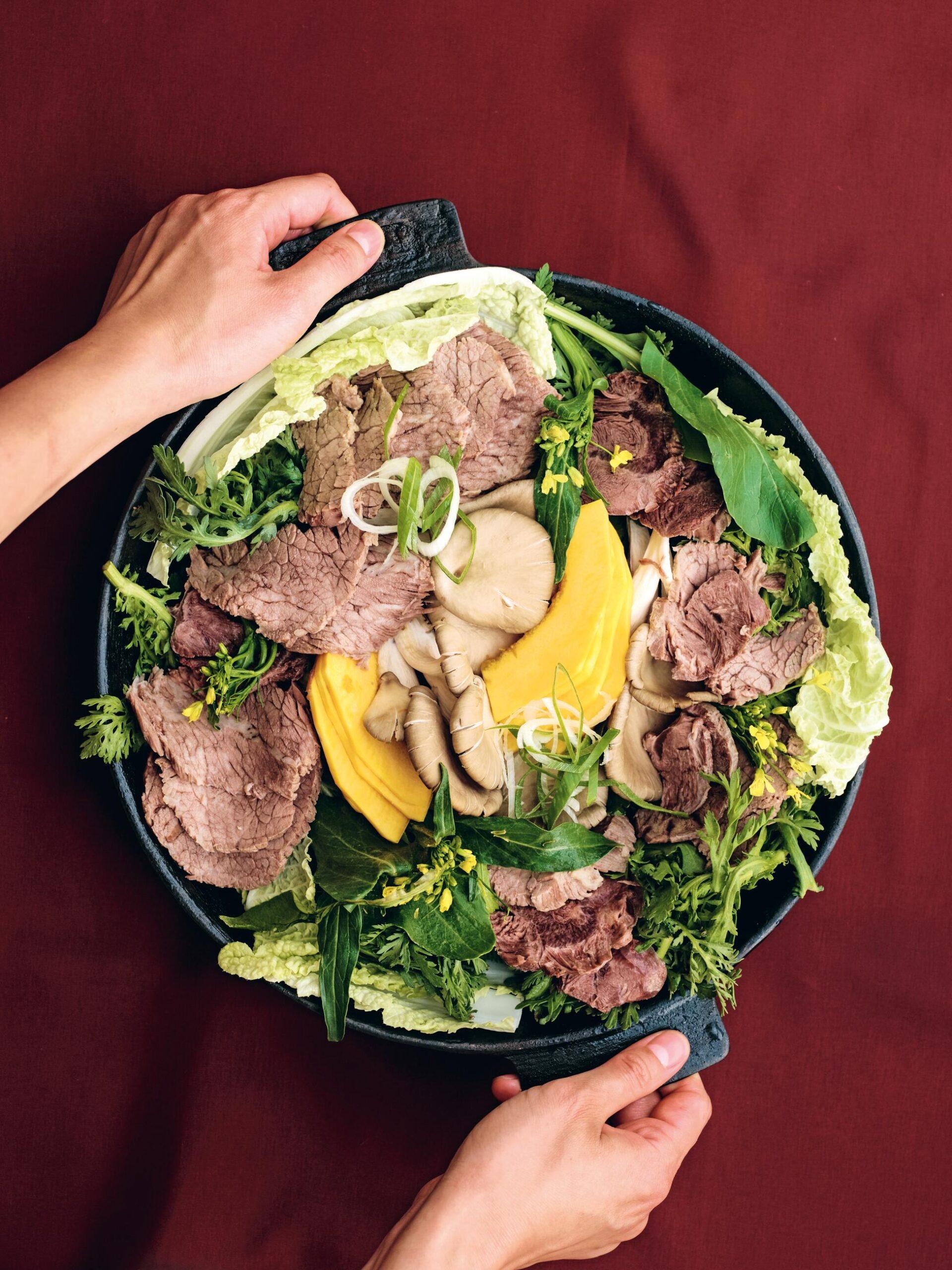
Korean Soups Recipes for Soups and Stews that Nourish, Restore, and Delight by Clara Lee & Eddo Kim
Here is another cookery book for all armchair foodie explorers. The authors of Korean Soups introduces the reader to recipes that show how to make, plate-up and enjoy Korean soups
The cookery book is organised into four main chapters that explain soups in Korean culture
Soups for Taking Things Fast or Slow
Soups for the Weather and Seasons
Soups That Bring Us Together
Soups for Restoration
Not only do Korean Soups offer delicious recipes, but the authors also add great advice on how to stock a Korean pantry (ingredients can be sourced from various websites).
I just love soup recipes: the combination of vegetables, interesting herbs and spices are always warming and full of nutrition.
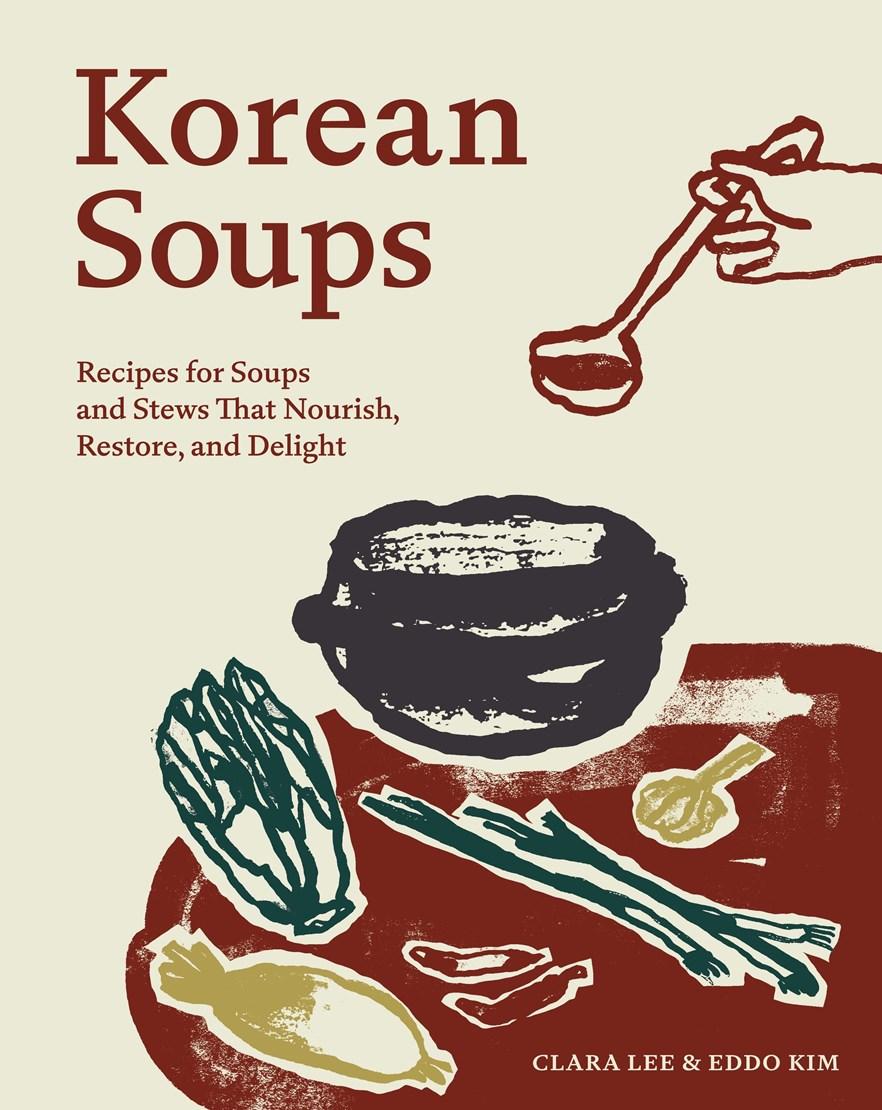
Here is a recipe adapted from the book. “Excerpted from Korean Soups by Clara Lee and Eddo Kim (Workman Publishing). Photographs by Scott Barry. Copyright © 2026.. Taken from the Soups for Restoration chapter:
Boiled Beef and Vegetable Hot Pot
EOBOK JAENGBAN
Serves 4
Beef
450g beef brisket, most of the fat and silver skin removed
450g beef shank
2.5 litres cold water
½ large yellow onion peeled
3 green onions (scallions) rinsed, untrimmed
6 whole large cloves garlic, peeled
5 cm piece dried kelp (dashima)
1 1/2 teaspoons whole black peppercorns
2 tablespoons Korean soy sauce (guk ganjang)
2 large dried whole Korean red chili peppers
Kosher salt
To assemble and simmer
5 large leaves napa cabbage, cut lengthwise along the stem and halved crosswise
A few slices of winter squash (such as kabocha or kuri), peeled, seeded, and cut into thin wedges (225g)
A handful of oyster mushrooms (45g) trimmed, torn by hand)
A handful of chrysanthemum greens (55g)
A handful of choy sun (170g), trimmed
Prepare the beef:
Rinse the brisket and shank under cold water, then place in a large bowl with enough water to cover. Place in the refrigerator and soak about 3 hours, renewing the water every 30 minutes, until the water runs the faintest pink. Drain the beef, rinse again, and place in a saucepan with enough water to cover. Bring to a boil over high heat. Cook for about 8 minutes, skimming regularly, with a fine mesh skimmer, then drain and rinse the beef once more.
Wash and wipe the pot clean, and place the beef back in the pot along with the (2.5 litres) cold water, yellow onion, green onions, garlic kelp, peppercorns, and dried chilis. Bring to a boil over high heat. Just before the broth begins to bubble, use tongs to remove the kelp to avoid imparting any bitterness. Cook for 10 minutes, skimming often. Reduce the heat to low, cover and gently simmer for about 3 hours, so the connective tissue breaks down slowly and the meat becomes tender and moist.
Use tongs to transfer the beef to a medium bowl and set aside to cool. Line a fine-mesh strainer with cheesecloth and strain the broth into another bowl, discarding all the aromatics except the garlic. Mash the garlic into a paste and add it to the strained broth. Season the broth with the soy sauce and a pinch of kosher salt. When the beef is cool enough to handle, use a sharp knife to thinly slice it against the grain.
Assemble and simmer:
Arrange the cabbage leaves in a wide casserole pan, the layer the squash, mushrooms, chrysanthemum greens and choy sum on top. Nestle in the slices of meat so that the ingredients are neatly and beautifully arranged. Pour in the broth and bring to a simmer. Cook over medium heat on the stovetop or on a portable burner in the centre of the table until the vegetables are soft and cooked through, about 6 to 8 minutes.
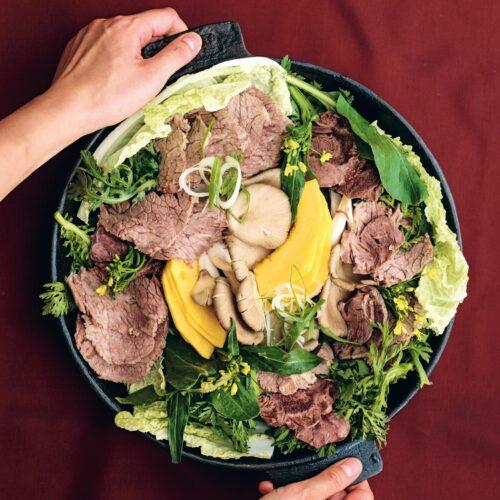
Boiled Beef and Vegetable Hot Pot
Ingredients
- Beef
- 450 g beef brisket most of the fat and silver skin removed
- 450 g beef shank
- 2.5 litres cold water
- ½ large yellow onion peeled
- 3 green onions scallions rinsed, untrimmed
- 6 whole large cloves garlic peeled
- 5 cm piece dried kelp dashima
- 1 1/2 teaspoons whole black peppercorns
- 2 tablespoons Korean soy sauce guk ganjang
- 2 large dried whole Korean red chili peppers
- Kosher salt
- To assemble and simmer
- 5 large leaves napa cabbage cut lengthwise along the stem and halved crosswise
- A few slices of winter squash such as kabocha or kuri, peeled, seeded, and cut into thin wedges (225g)
- A handful of oyster mushrooms 45g trimmed, torn by hand)
- A handful of chrysanthemum greens 55g
- A handful of choy sun 170g, trimmed
Instructions
- inse the brisket and shank under cold water, then place in a large bowl with enough water to cover. Place in the refrigerator and soak about 3 hours, renewing the water every 30 minutes, until the water runs the faintest pink. Drain the beef, rinse again, and place in a saucepan with enough water to cover. Bring to a boil over high heat. Cook for about 8 minutes, skimming regularly, with a fine mesh skimmer, then drain and rinse the beef once more.
- Wash and wipe the pot clean, and place the beef back in the pot along with the (2.5 litres) cold water, yellow onion, green onions, garlic kelp, peppercorns, and dried chilis. Bring to a boil over high heat. Just before the broth begins to bubble, use tongs to remove the kelp to avoid imparting any bitterness. Cook for 10 minutes, skimming often. Reduce the heat to low, cover and gently simmer for about 3 hours, so the connective tissue breaks down slowly and the meat becomes tender and moist.
- Use tongs to transfer the beef to a medium bowl and set aside to cool. Line a fine-mesh strainer with cheesecloth and strain the broth into another bowl, discarding all the aromatics except the garlic. Mash the garlic into a paste and add it to the strained broth. Season the broth with the soy sauce and a pinch of kosher salt. When the beef is cool enough to handle, use a sharp knife to thinly slice it against the grain.
- Assemble and simmer:
- Arrange the cabbage leaves in a wide casserole pan, the layer the squash, mushrooms, chrysanthemum greens and choy sum on top. Nestle in the slices of meat so that the ingredients are neatly and beautifully arranged. Pour in the broth and bring to a simmer. Cook over medium heat on the stovetop or on a portable burner in the centre of the table until the vegetables are soft and cooked through, about 6 to 8 minutes.
There is also a dipping sauce recipe to make with this soup (included within the cook book).
Korean Soups is an ideal book to add to your kitchen bookshelf – full of information on Korean ingredients that can help you gain great confidence when choosing to try out new soup recipes Korean style.
Korean Soups is published by Workman Publishing and is available from all the usual book outlets.