Glasgow Rose Transforms Finnieston Crane for Glasgow 2026
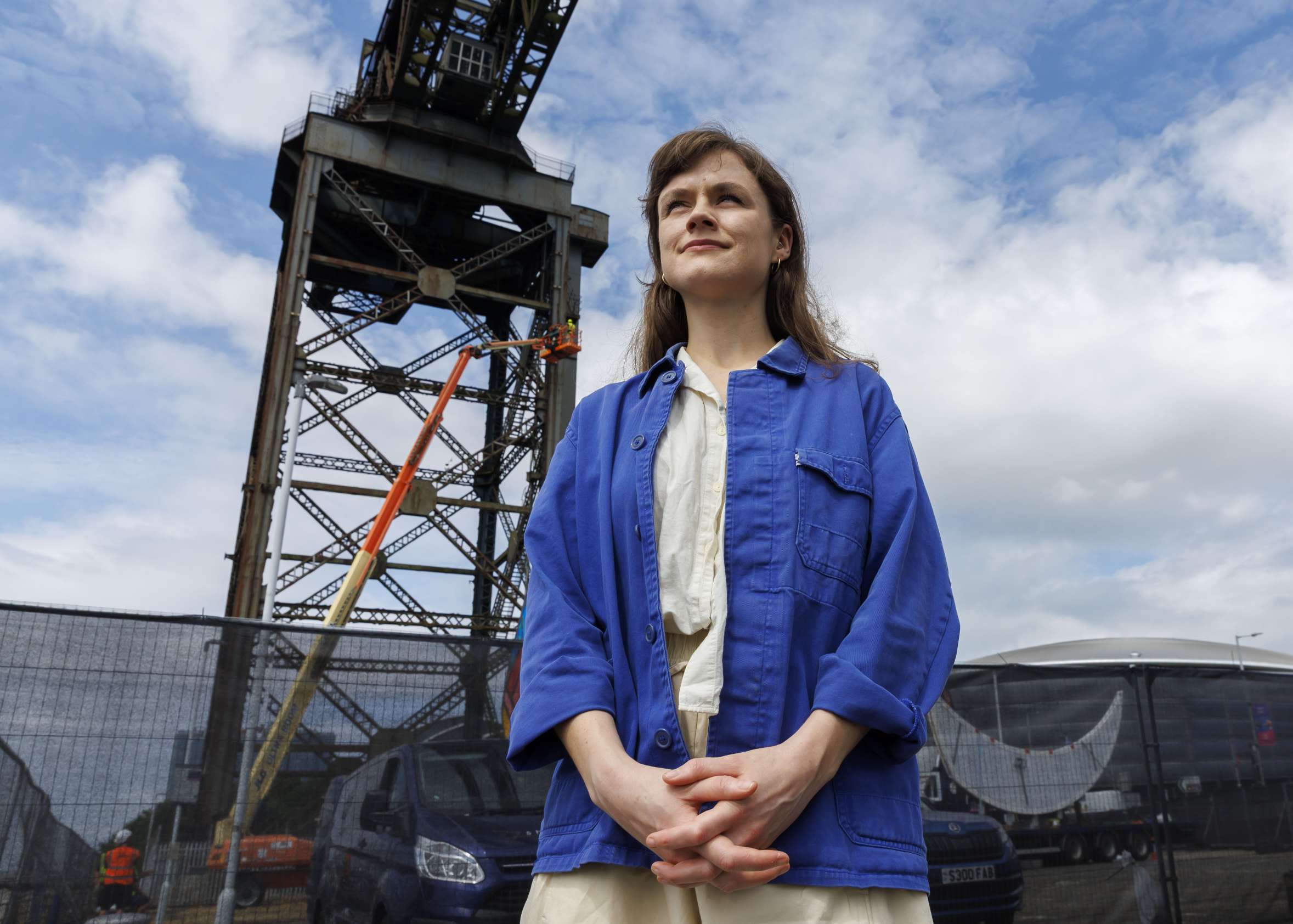
Glasgow Rose transforms Finnieston Crane for Commonwealth Games
Two of Glasgow’s best-known symbols have been brought together in a spectacular new artwork created to mark the opening of the Glasgow 2026 Commonwealth Games.
The Glasgow Rose has transformed the Finnieston Crane with a huge contemporary interpretation of the distinctive rose designs associated with Charles Rennie Mackintosh and Margaret Macdonald Mackintosh.
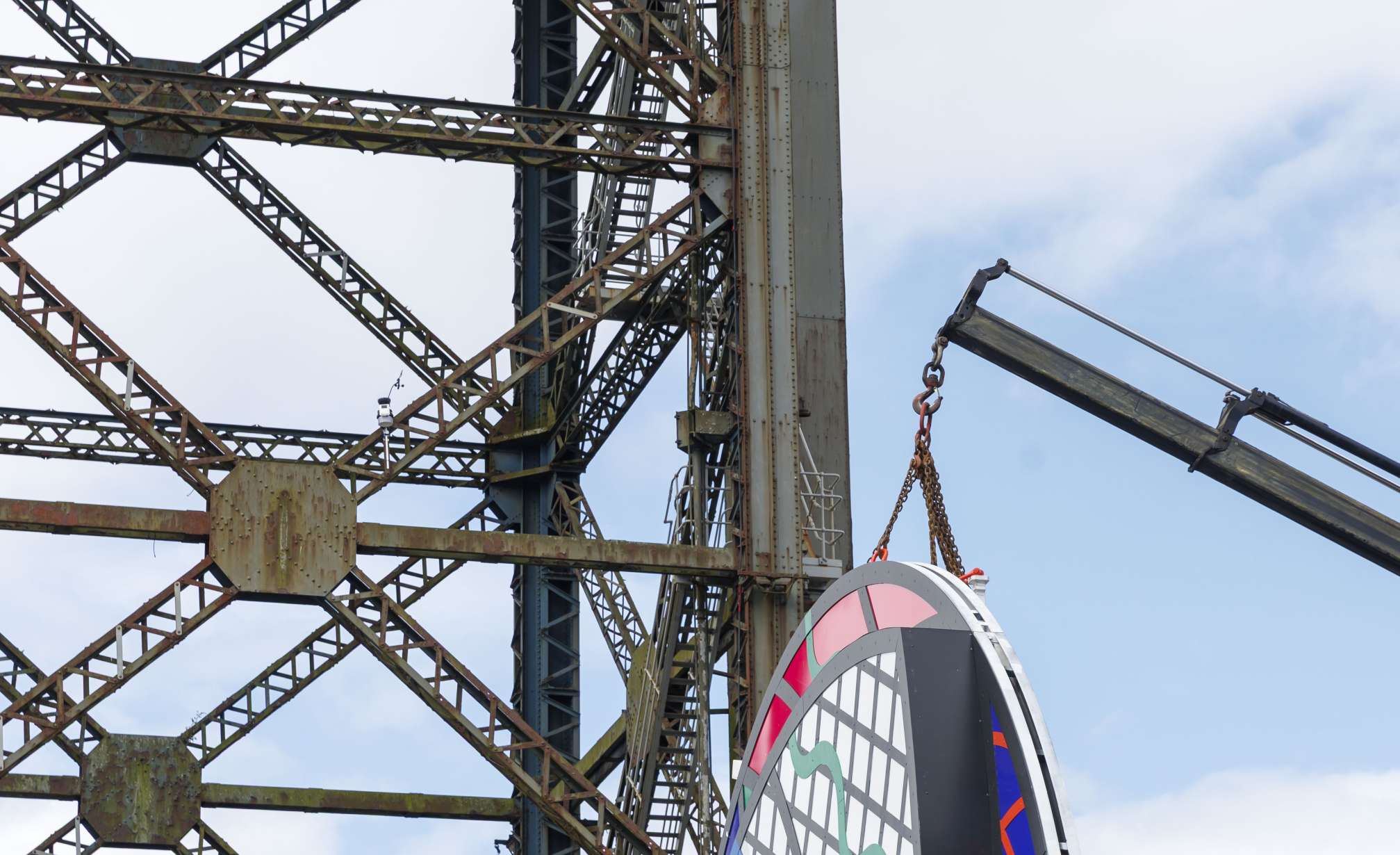
Suspended high above the River Clyde, the installation creates a striking new addition to the Glasgow skyline and will welcome athletes, spectators and visitors arriving in the city for the Games.
The large-scale artwork has been created by Glasgow-based artist Emer Tumilty in collaboration with internationally renowned creative studio NEWSUBSTANCE.
Two Glasgow icons brought together
The Finnieston Crane has long represented Glasgow’s industrial heritage, recalling the shipbuilding, engineering and innovation that helped establish the city’s reputation around the world.
The Mackintosh rose has become an equally recognisable symbol of Glasgow’s artistic and architectural influence.
The Glasgow Rose brings the two icons together for the first time, combining the city’s industrial history with its creative legacy.
Drawing inspiration from the work of Charles Rennie Mackintosh and Margaret Macdonald Mackintosh, Tumilty has reinterpreted the familiar rose motif using bold colours, graphic shapes and a contemporary style.
The artwork celebrates Glasgow as a city that continues to make, create and reinvent itself.
Celebrating Glasgow’s creative future
Emer Tumilty studied at the Glasgow School of Art before making the city her home. Her work includes murals, installations and public art, often using colourful abstract forms to change how people interact with familiar spaces.
Previous clients and collaborators have included Adobe, Urban Outfitters, Warby Parker, NHS England, the National Galleries, House for an Art Lover and Glasgow School of Art.
Tumilty said creating the installation had been an extraordinary experience.
“As someone who came to Glasgow to study at The Glasgow School of Art before making the city my home, this has been an extraordinary commission to create,” she said.
“The Mackintosh rose is recognised around the world, and to see it reimagined at this scale, suspended from the Finnieston Crane, has been incredibly special.
“I hope people see a work that celebrates Glasgow’s creativity, optimism and character, and feel the affection for the city that inspired every part of it.”
A landmark welcome to Glasgow 2026
The installation has been commissioned as part of the Glasgow 2026 Festival, a ten-week programme of cultural events running alongside the Commonwealth Games.
Phil Batty, Chief Executive of Glasgow 2026, described the artwork as a powerful symbol of the city.
“The Finnieston Crane tells the story of the city that built the world. The Mackintosh rose tells the story of the city that inspired the world,” he said.
“Together they create a powerful symbol of the Glasgow we are welcoming people to today – creative, confident, bold and proudly looking to the future.”
He added that the commission celebrates Glasgow’s artistic history while also placing the spotlight on the contemporary talent shaping the city’s future.
Art meets engineering
Installing such a large artwork on one of Scotland’s most recognisable industrial structures required close collaboration between artists, designers, engineers, producers and makers.
NEWSUBSTANCE specialises in creating ambitious large-scale installations and experiences by combining art, architecture, technology and engineering.
Patrick O’Mahoney, founder and creative director of NEWSUBSTANCE, said the installation was both an artistic and technical achievement.
“Projects like this only happen when art, engineering and creative ambition come together,” he said.
“To transform one of Glasgow’s most iconic structures into a canvas at this scale has been an extraordinary challenge and a privilege. The result is something that belongs uniquely to Glasgow.”
Glasgow’s sporting and cultural celebration
Bailie Annette Christie, Chair of Glasgow Life and City Convener for Culture, Sport and International Relations, said the artwork demonstrated Glasgow’s ability to combine major sporting events with culture.
She said the contemporary interpretation of the Mackintosh rose was a fitting symbol for the Commonwealth Games and an important marker ahead of the centenary of Charles Rennie Mackintosh’s death in 2028.
Matthew Williams, director of the Charles Rennie Mackintosh Society, also welcomed the installation.
“Charles Rennie Mackintosh has been at the heart of Scottish culture for over 150 years, so it’s exciting to see an interpretation of his work included as part of the Commonwealth Games,” he said.
He added that the project would also help showcase the work of emerging Glasgow-based artist Emer Tumilty.
When can you see the Glasgow Rose?
The Glasgow Rose will be unveiled on the Finnieston Crane on Thursday 23 July 2026, coinciding with the opening of the Glasgow 2026 Commonwealth Games.
It will remain visible across the River Clyde throughout the Games, which run from 23 July until 2 August 2026.
The Commonwealth Games will feature ten sports and six Para sports, staged across four Glasgow venues:
– Scotstoun Stadium
– Scottish Event Campus
– Glasgow International Arena
– Tollcross International Swimming Centre
The accompanying Glasgow 2026 Festival runs until 9 August 2026, with hundreds of performances, artworks, community activities and participation opportunities taking place across the city.
Many of the festival events will be free to attend.
Image: Artist Emer Tumilty at the Finnieston Crane ahead of the Glasgow Rose installation. Photo credit: Colin Mearns.