 Emma Mykytyn
 Glasgow’s Photoautomat Project Brings a Slice of Analogue Berlin to the Trongate
Glasgow has gained a genuine vintage Berlin photo booth, giving visitors the chance to step behind the curtain, strike four poses and leave with a wonderfully imperfect strip of black-and-white photographs.
Located inside Trongate 103 in Glasgow’s Merchant City, Photoautomat Glasgow is more than a nostalgic photo opportunity. It is part of an ongoing creative project by Glasgow photographer Simon Murphy, exploring analogue photography, human connection and the ability of a camera to break down barriers.
From Glasgow to Berlin
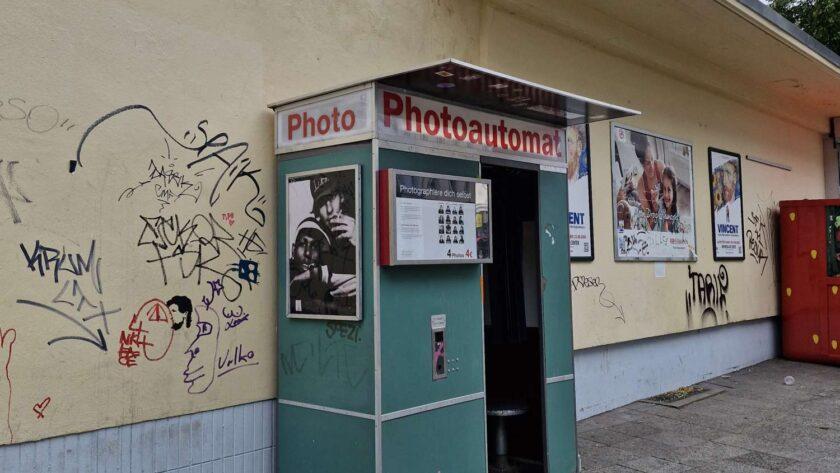
The story begins in Berlin, a city where old-fashioned analogue photo booths have become part of the streetscape.
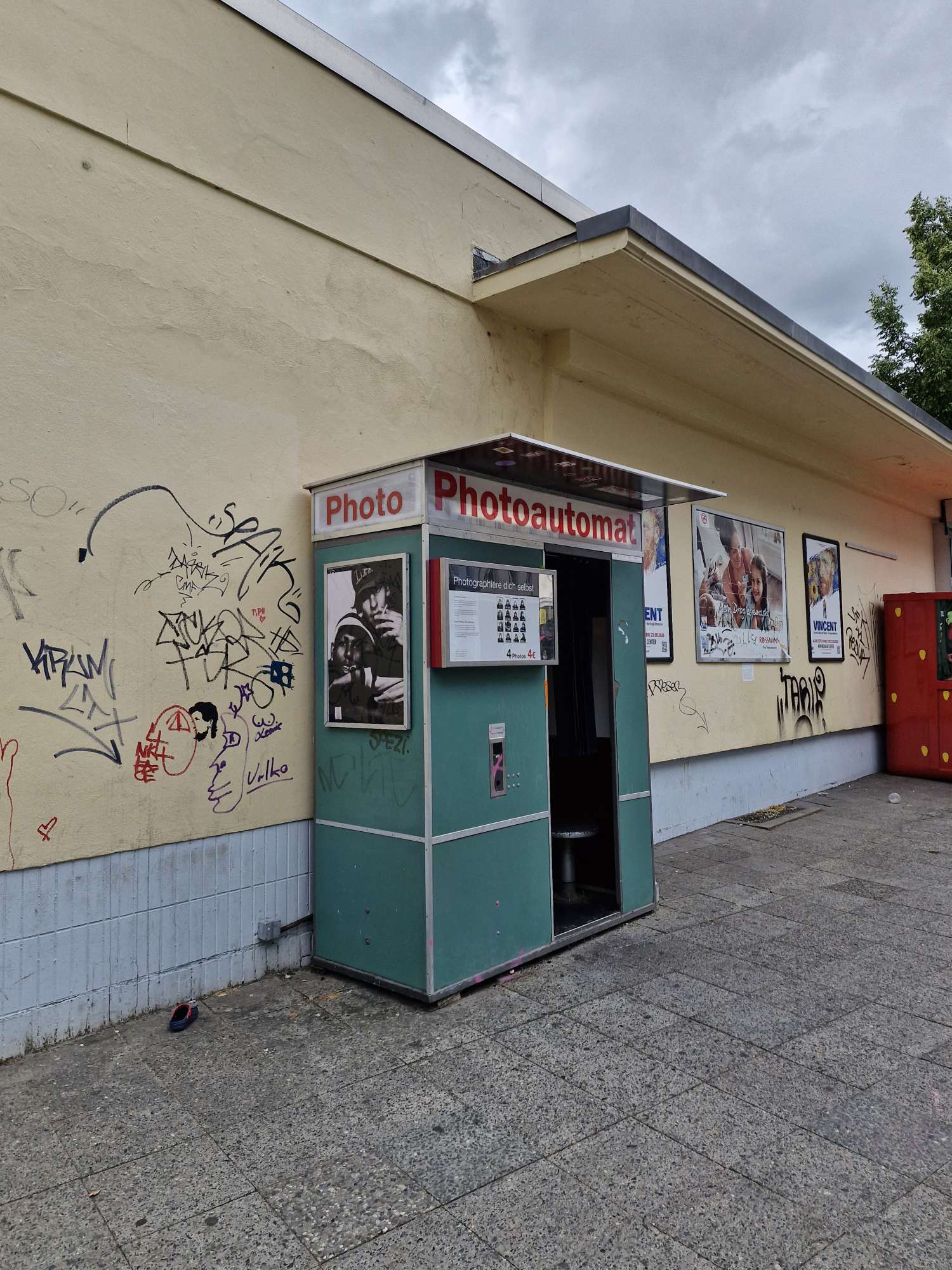
Often found outside bars, beside railway stations and in busy cultural areas, the machines offer something increasingly rare: a photograph that has not been retouched, filtered or carefully selected from dozens of attempts.
Murphy began documenting Berlin’s Photoautomats as a deliberate contrast to his acclaimed Govanhill project. While Govanhill was created largely through medium-format film portraits within one Glasgow neighbourhood, Photoautomat was conceived in colour and focused on the tiny spaces occupied by Berlin’s booths.
Murphy described the project as being photographed “within and around boxes around two metres squared”. He initially planned to concentrate on landscapes and details rather than people, although the human element gradually found its way into the work.
The restrictions are part of its appeal. Each booth occupies only a small patch of pavement, yet its scratches, stickers, curtains, surroundings and customers reveal something about the neighbourhood around it.
Murphy eventually completed a mission to visit and document all 34 of Berlin’s Photoautomats.
A genuine Berlin booth in Glasgow
The project then developed an unexpected physical dimension.
Rather than simply bringing photographs of Berlin’s booths back to Scotland, Murphy arranged for a genuine analogue Photoautomat to be transported to Glasgow. The vintage machine was reportedly rescued from demolition before being installed at Trongate 103.
Its arrival means Glaswegians can experience the same analogue ritual without travelling to Berlin.
There is no touchscreen full of filters, no opportunity to swipe through several versions and no button to smooth your skin. You sit down, adjust the stool, look towards the camera and wait for the flashes.
A few minutes later, the machine produces a physical strip of four black-and-white photographs.
That unpredictability is half the fun. Someone inevitably looks in the wrong direction, laughs at the wrong moment or gets caught halfway through changing their expression. The finished strip feels far more personal than another carefully arranged phone photograph.
How does the Photoautomat work?
The Glasgow machine uses a traditional analogue photographic process rather than simply printing digital pictures in a retro format.
Inside a working analogue booth, the photographic paper is exposed before passing through chemical developing baths within the machine. The process takes roughly four minutes, after which a unique strip of four images appears. There is no digital file or saved negative, making each strip a one-off object.
A session at the Glasgow Photoautomat costs £5 and produces four photographs.
Bring a friend, squeeze in with the family or take a solo portrait. Four frames give you just enough time to begin with a sensible expression before things inevitably descend into chaos.
The Photoautomat book
Murphy’s Berlin photographs are also being brought together in a new book documenting the city’s analogue booths and the communities surrounding them.
A Kickstarter campaign to fund the printing of Photoautomat is due to launch on Monday 27 July 2026. The planned publication continues the journey from Glasgow to Berlin and back again, turning a project about small mechanical boxes into a wider celebration of photographic culture.